The short answer
A chimney sweep removes soot, creosote and debris from the flue and checks the chimney for blockages and damage. The NFPA 211 standard calls for chimneys, fireplaces and vents to be inspected once a year, so most homeowners schedule a sweep and inspection every year, ideally before heating season starts.
Every season a fireplace, wood stove or boiler is used, its flue collects soot, creosote and debris. Our chimney sweep service clears that buildup, checks the flue for blockages and damage, and gives you a plain account of what we found. We work in brownstones, row houses, detached homes and apartment buildings across Brooklyn and nearby neighborhoods, and we keep your living space clean while we work. Below you'll find what to watch for, what a visit includes, how the crew works, and what affects the cost.
Signs you need a chimney sweep
Chimney problems usually build slowly and are easy to miss until the fireplace or stove starts acting differently. If you notice any of the following, have the flue swept and inspected.
- A musty, smoky or burnt smell from the fireplace, especially on humid days or when the heat is on
- Smoke drifting into the room instead of drawing up the flue
- Black flakes, soot or bits of masonry falling onto the hearth or damper
- Debris, nesting material, or sounds of birds or animals in the chimney
- Fires that are hard to start or keep going, which can point to weak draft
- Dark, shiny or crusty buildup on the damper or inside the firebox
- A change to the system, such as a new stove, insert or boiler, or a switch from oil to gas
- A home purchase or sale, or a fireplace that hasn't been used or checked in a long time
What a chimney sweep includes
Every visit follows the same checklist, so you know exactly what was done.
- A visual check of the firebox, damper, smoke chamber and accessible flue before work begins
- Drop cloths along the path from the entry to the fireplace, plus covers for the hearth and nearby furniture
- A sealed fireplace opening, with a HEPA vacuum running under negative pressure
- Brushing the flue with rotary brushes sized to the liner
- Clearing loose soot and debris from the smoke shelf and smoke chamber
- Removing nesting material and debris from the flue where it can be reached
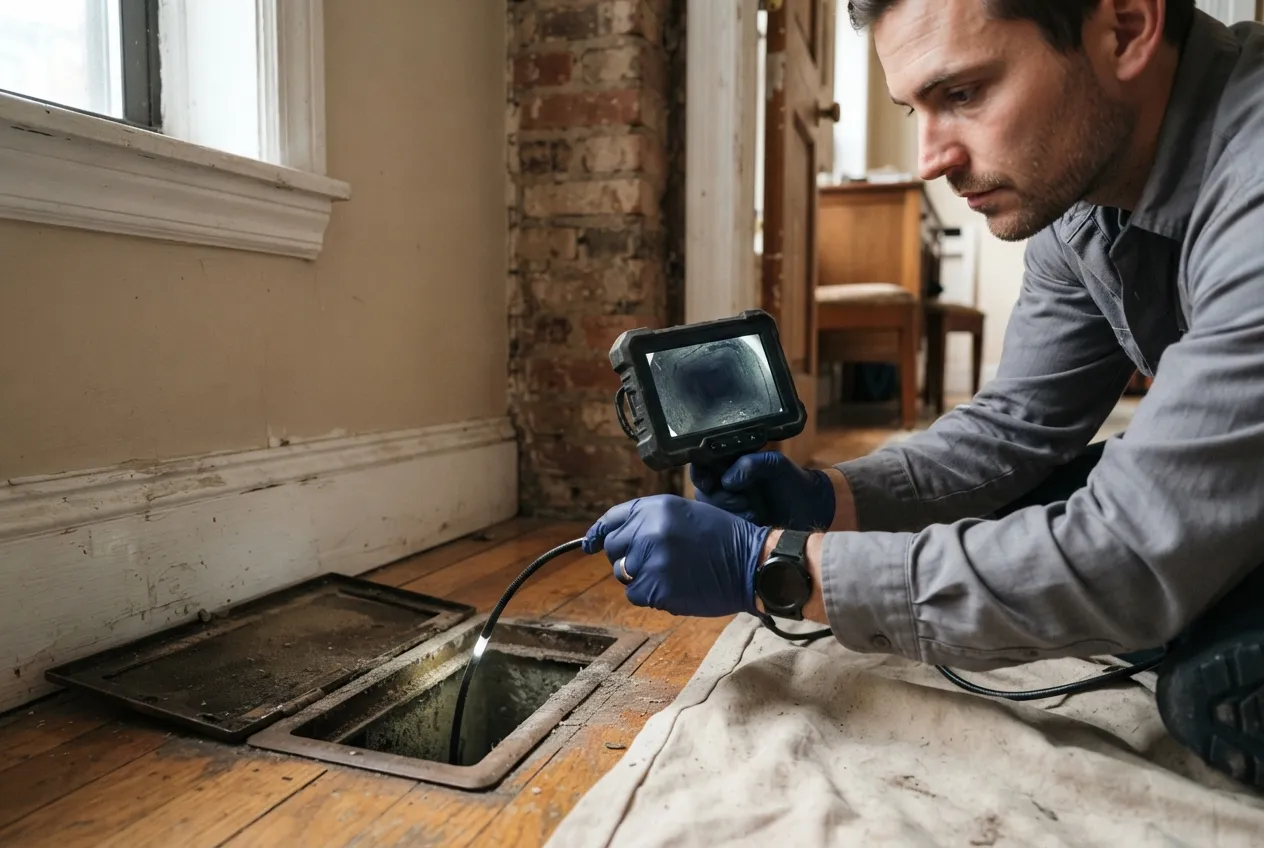
- A camera inspection of the flue liner where access allows
- A check that the damper opens and closes properly
- A look at the chimney cap, crown and visible exterior masonry where they can be reached safely
- A written summary of findings, with photos where we took them, and any recommended repairs
How our crew works inside your home or apartment
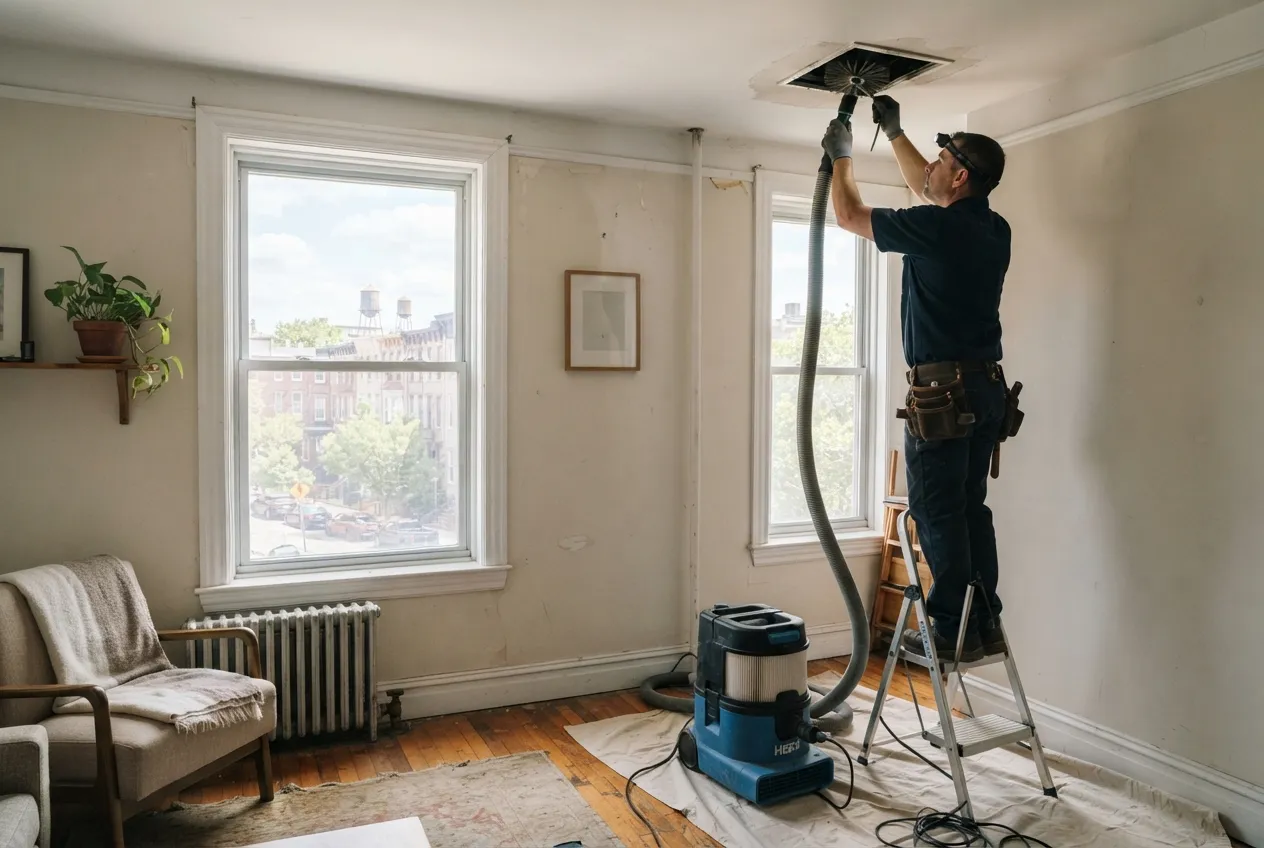
Brooklyn chimneys run through living rooms, shared hallways and finished apartments, so our crew treats containment as part of the job. Before any brushing starts, technicians lay drop cloths from the door to the fireplace and cover the hearth and nearby furniture. Then they seal the fireplace opening with plastic and run a HEPA vacuum under negative pressure, so soot is pulled into the machine instead of drifting into the room.
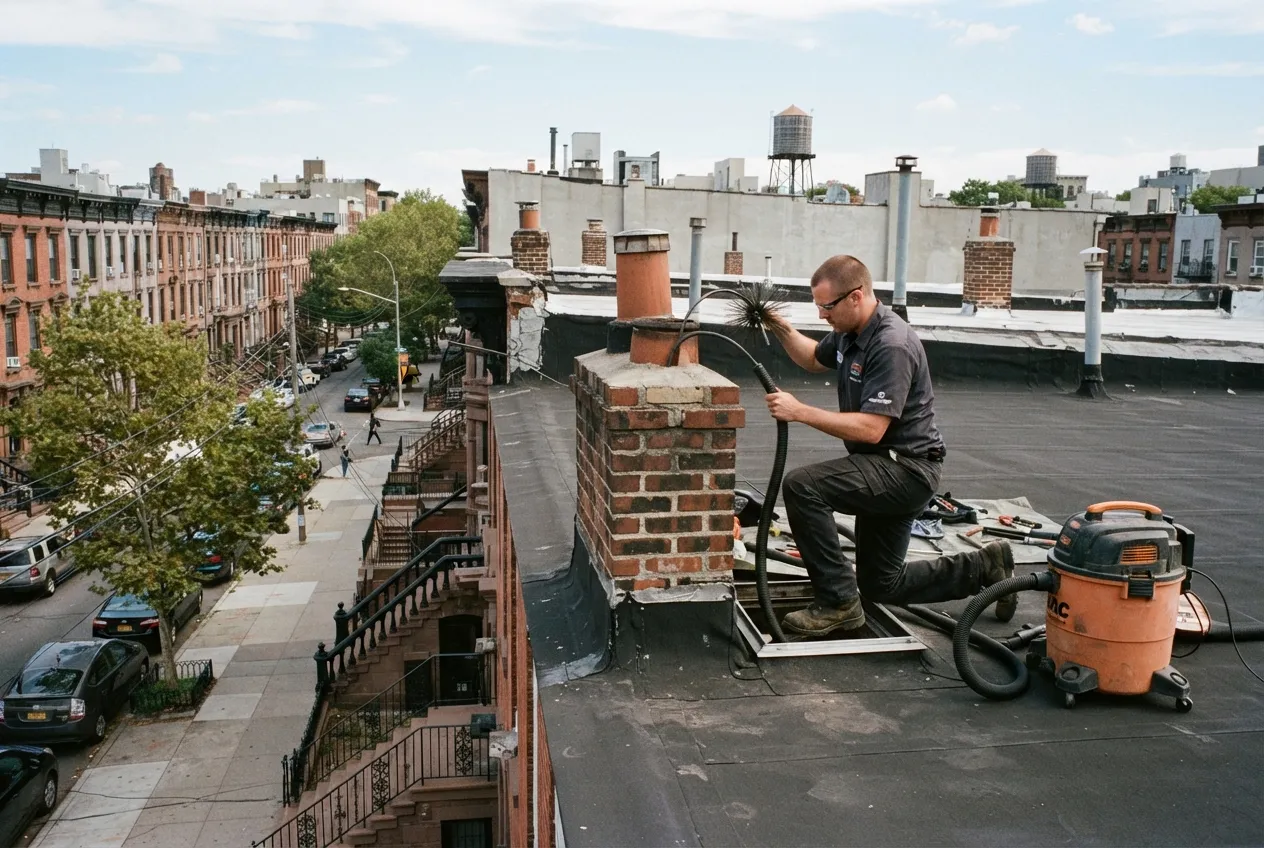
Our certified technicians then work the flue with rotary brushes. Where the shape of the flue or smoke chamber calls for it, they also use air whips. Loosened deposits fall into the contained area. When access allows, we run a camera up the liner to look for cracks, gaps, hard glazed creosote or blockages that a brush alone would miss. When the work is done, we pick up the cloths, vacuum the hearth and walk you through what we saw.
If a chimney still has an odor after cleaning, or there are signs of animals or visible growth, we may suggest a treatment. We only use products registered for that use, and only when there is a specific reason for it. We never apply treatments by default, and we make no health claims for them.
Ready for cleaner ducts?
The standards that apply to your chimney
The NFPA 211 standard calls for chimneys, fireplaces and vents to be inspected once a year. Chimney professionals use three inspection levels. Level 1 is for systems where nothing has changed. Level 2 applies when something has changed, such as a new appliance or a switch of fuel, or when the home is being sold. Level 3 is for cases where a hidden hazard can only be reached by opening part of the chimney or the building. Most annual visits are Level 1, and we'll tell you if what we see points to a higher level.
Oil-to-gas conversions are common in Brooklyn. When a New York City building converts its boiler from oil to gas, the chimney has to be evaluated as part of the work, and a new liner is often needed. Gas exhaust produces acidic condensate that can corrode a masonry flue, so a flue that worked fine with oil may not be suitable for gas.
New York City's heat season runs from October 1 through May 31. During that time, building owners must keep apartments heated to the city's minimum temperatures, so boiler flues in multifamily buildings get heavy use for most of the year. Many owners schedule chimney service before October so the system is checked before it's needed most.
What affects the price
Chimneys in this area vary widely, so we quote once we know the details of yours. The main factors are:
- The number of flues and appliances, such as a fireplace plus a boiler or stove
- Flue height and how the chimney is reached, including roof access on row houses and taller buildings
- The amount and type of buildup, from light soot to hardened, glazed creosote
- The condition of the liner, damper, cap and masonry
- Blockages such as nests or fallen debris
- Building type: single-family house, brownstone, co-op, or a larger apartment building with shared flues
- Whether a camera inspection or a Level 2 or Level 3 inspection is needed
How a visit works
First, you contact us and tell us about the chimney: what it serves, how often you use it, and anything unusual you've noticed. We schedule a time that works for you. In apartment buildings, we coordinate with the super or management for roof access if it's needed.
On the day of the visit, the crew arrives, takes a quick look and explains the plan. Then they set up protection, sweep and inspect, and clean up. Before leaving, the technician walks you through the findings and any repairs worth considering. We never do work beyond the agreed sweep without your approval.
Please don't use the fireplace or stove in the hours before the visit, so the firebox is fully cool. If we're sweeping a boiler flue, the boiler will need to be off while we work.
Chimney Sweep by city
- Chimney Sweep in Greenpoint
- Chimney Sweep in Long Island City
- Chimney Sweep in Hunters Point
- Chimney Sweep in Williamsburg
- Chimney Sweep in Stuyvesant Town
- Chimney Sweep in Sunnyside
- Chimney Sweep in Peter Cooper Village
- Chimney Sweep in East Williamsburg
- Chimney Sweep in Murray Hill
- Chimney Sweep in Kips Bay
- Chimney Sweep in East Village
- Chimney Sweep in Gramercy