The short answer
A chimney sweep in Peter Cooper Village removes soot and creosote, clears blockages, and checks the flue so smoke and exhaust leave the building safely. The NFPA 211 standard calls for chimneys, fireplaces and vents to be inspected once a year, and fall, before New York City's heat season starts on October 1, is a practical time to schedule it.
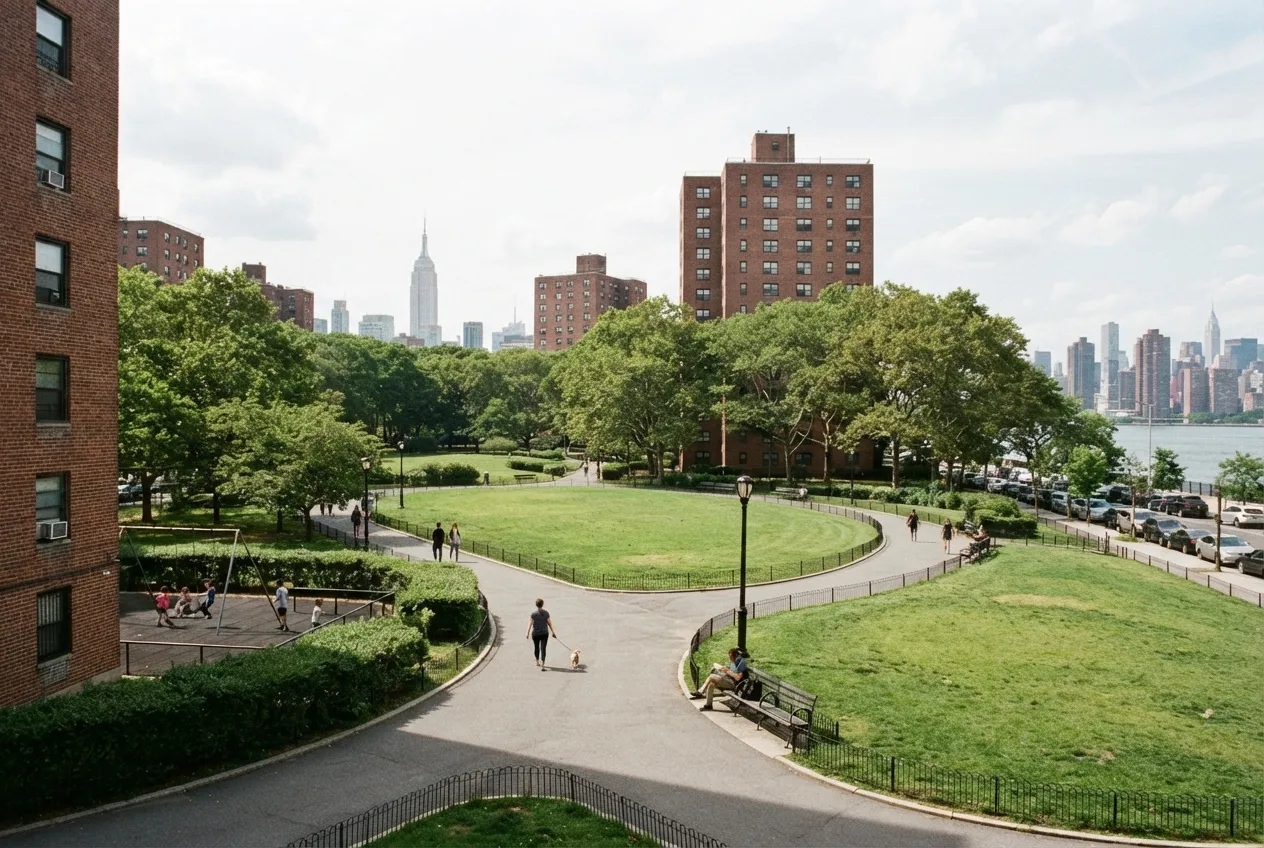
Peter Cooper Village sits on Manhattan's east side, about a mile across the East River from our office in Greenpoint, Brooklyn. Most homes here are in large apartment buildings heated by central boilers. That puts much of the chimney work on building systems rather than individual fireplaces, though some apartments and nearby properties do have working flues. MetroFlow's certified technicians sweep and inspect chimneys, fireplaces and vents for residents, owners and building managers in Peter Cooper Village and the surrounding neighborhoods. We explain what we find in plain terms so you can decide what, if anything, needs to happen next.
What a Chimney Sweep Covers Here
In a neighborhood made up largely of apartment buildings, chimney work usually falls into two groups. The first is the building's own heating flue, which carries exhaust from the boiler up and out. The second is any fireplace or stove flue serving an individual unit or a nearby home.
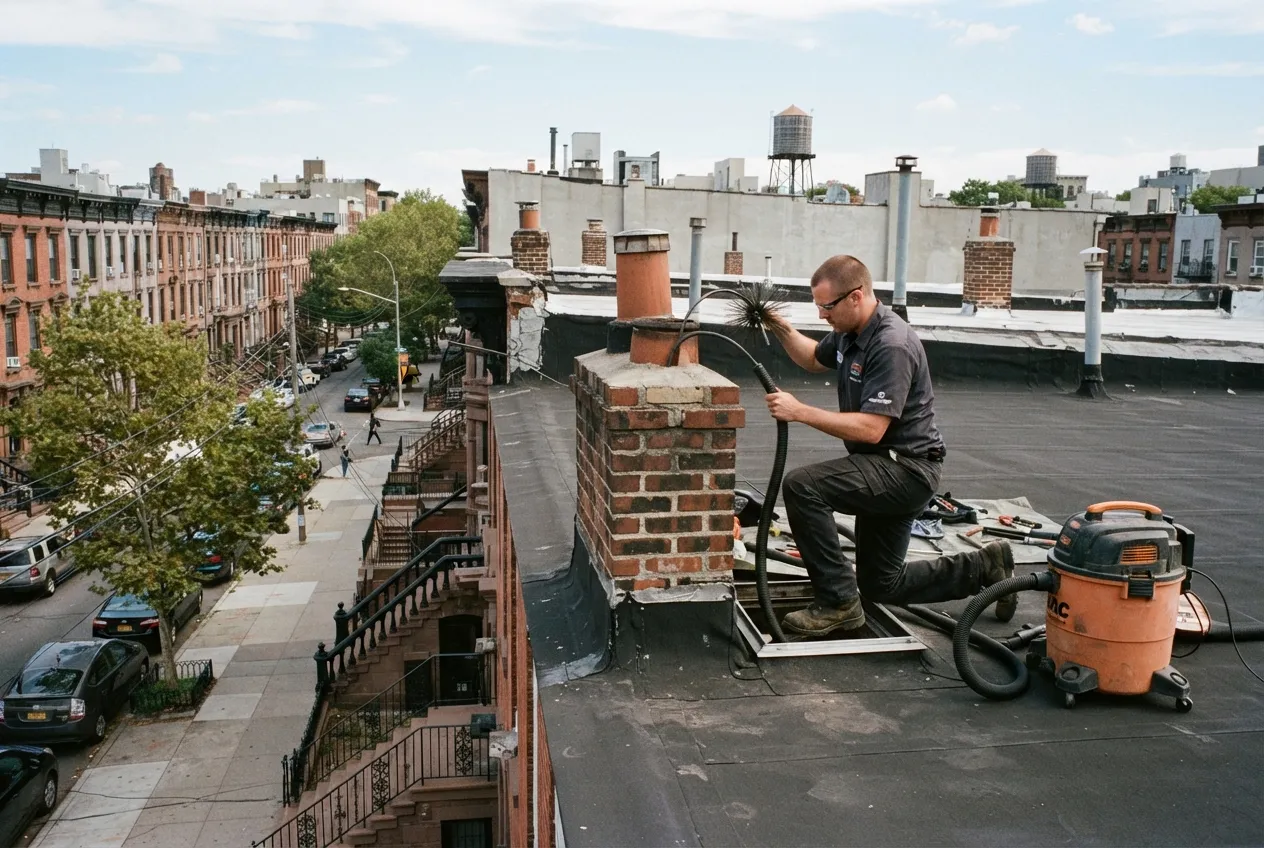
For either kind, a sweep focuses on the inside of the flue and the parts that control airflow. We clean out what has built up and look for anything that could keep smoke or exhaust from venting properly.
- Brushing and vacuuming soot and creosote from the flue
- Clearing debris, nesting material and other blockages
- Checking the damper, smoke chamber and firebox on fireplaces
- Looking at the flue liner for cracks, gaps or deterioration
- Checking the chimney cap and the top of the flue where it can be reached safely
- Reviewing the connector between a heating appliance and the chimney
Annual Inspections and the Three Levels
The NFPA 211 standard calls for chimneys, fireplaces and vents to be inspected once a year. Chimney professionals use three levels of inspection, and the right one depends on what has happened since the last visit.
A Level 1 inspection fits when nothing about the system has changed and it is used the same way it always has been. A Level 2 inspection is used when the system changes, such as a new appliance or a switch of fuel, or when the property is sold. A Level 3 inspection applies when a hidden hazard has to be reached by opening part of the chimney or the building. We will tell you which level makes sense for your situation and why.
Boiler Chimneys and Oil-to-Gas Conversions
Many Manhattan apartment buildings were originally heated with oil, and many have since moved to gas. When a New York City building converts its boiler from oil to gas, the chimney has to be evaluated as part of the work. A new liner is often needed, because gas exhaust produces acidic condensate that can corrode a masonry flue over time.
If your building has converted, or is planning to, we can inspect the flue, clean out residue left from oil firing, and describe the liner's condition so the owner or manager has clear information to work with. Signs such as flaking masonry inside the flue, moisture stains, or debris collecting at the base of the chimney are worth having looked at.
Ready for cleaner ducts?
Timing Around the Heat Season
New York City's heat season runs from October 1 through May 31. During those months, building owners must keep apartments heated to the city's minimum temperatures, so the boiler and its chimney are working hard for most of the year.
Scheduling a sweep and inspection in late summer or early fall gives time to deal with anything we find before the heat has to be on. For fireplace owners, the same window works well, because it is easier to fix a damper or clear a blockage before the first cold night than after.
Serving Peter Cooper Village and Nearby Areas
Because we work from Greenpoint, Peter Cooper Village is a short trip for our crews. We also serve neighboring Stuyvesant Town, East Village, Gramercy, Murray Hill and Kips Bay, where the housing ranges from large apartment complexes to pre-war buildings, rowhouses and brownstones.
In apartment buildings we work with residents, superintendents and management to plan access to roofs, boiler rooms and units. We use drop cloths and vacuums to contain soot, and we go over what we saw before we leave.
More services in Peter Cooper Village
- Air Duct Cleaning in Peter Cooper Village
- Dryer Vent Cleaning in Peter Cooper Village
- HVAC System Cleaning in Peter Cooper Village
- Duct Sanitizing & Odor Removal in Peter Cooper Village