The short answer
If your clothes take longer to dry, your dryer runs hot, or you notice a burnt smell, your dryer vent probably needs cleaning. MetroFlow's certified technicians clean the full run, from the connector behind the dryer to the outside hood or roof cap, and check airflow before they leave.
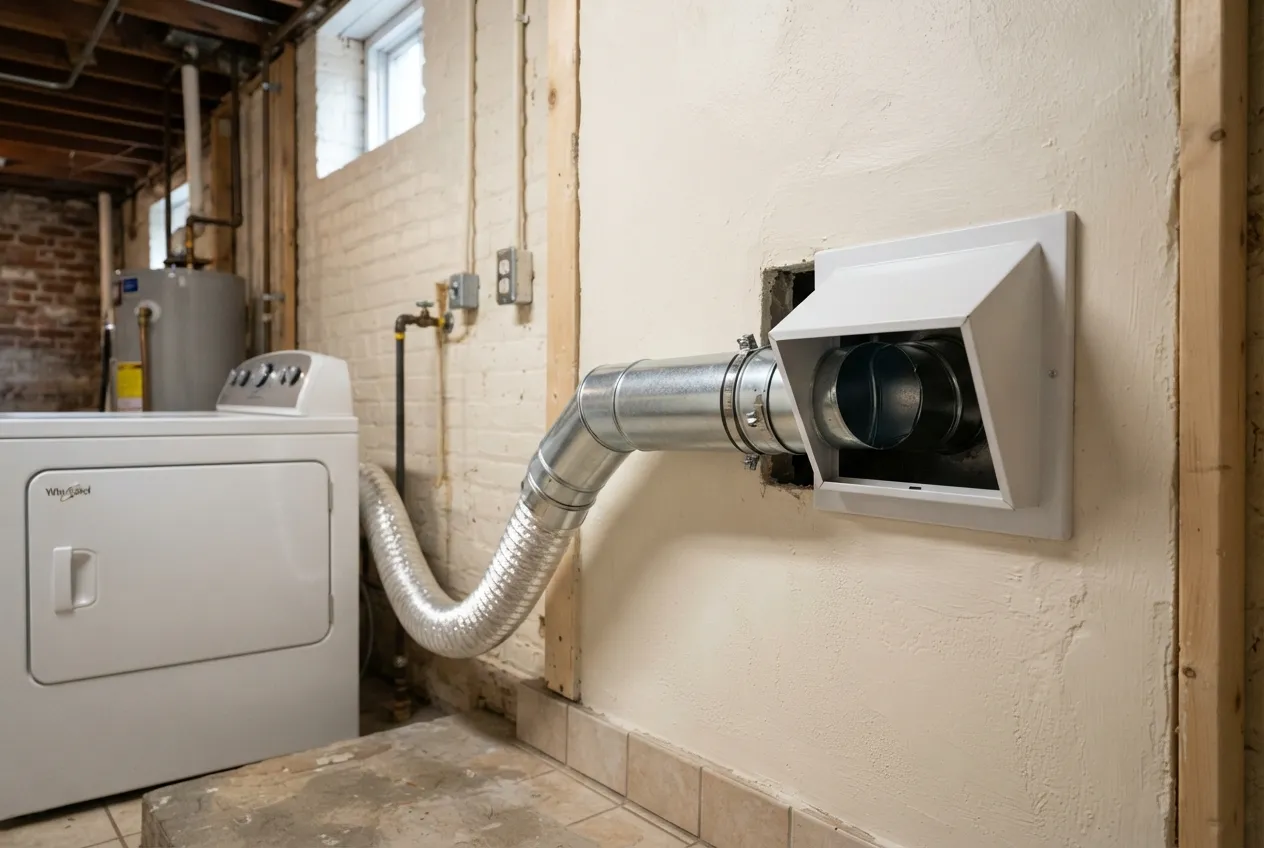
Your dryer vent carries hot, moist, lint-filled air from the back of the dryer to the outside. Over time, lint builds up along the walls of the duct, at every bend, and inside the exterior hood or roof cap. As it builds, the dryer works harder, clothes take longer to dry, and the space behind the machine runs hotter than it should. MetroFlow cleans dryer vents in houses, brownstones, and apartments across Brooklyn and nearby neighborhoods. We clean the whole path, from the connection behind your dryer to the point where the vent leaves the building. This page covers the signs to watch for, what the cleaning includes, how our crew works inside your home, what affects the price, and what to expect when you book.
Signs you need it
Dryer vent problems usually develop slowly, so they're easy to overlook. If you notice any of the following, have the vent checked:
- Clothes need a second or third cycle to dry, especially towels and jeans.
- The top or sides of the dryer feel very hot, or the laundry area gets warm and humid while it runs.
- A burnt or musty smell when the dryer is on.
- Weak airflow at the outside hood or roof cap. You can barely feel air pushing out while the dryer runs.
- Lint collecting behind the dryer, around the lint trap housing, or around the exterior flap.
- The flap on the outside hood is stuck open or stuck closed.
- Nesting material, debris, or signs of birds or rodents at the vent outlet.
- The dryer shuts off mid-cycle or shows an airflow or vent warning.
Why dryer vent cleaning matters
According to the U.S. Fire Administration, failure to clean is the leading factor contributing to clothes dryer fires in homes. Lint is light, dry, and burns easily. A clogged vent traps heat in the same places where lint collects.
Cleaning the lint screen after every load helps, but the screen doesn't catch everything. Fine lint passes through and settles inside the duct, especially at elbows, long horizontal runs, and the exterior termination. In many Brooklyn buildings, dryer vents run through walls, between floors, or up to the roof. That means longer runs and more places for lint to build up.
With a gas dryer, a restricted vent also makes it harder for exhaust to leave the home. That's one more reason to keep the vent clear.
If you smell burning, stop the dryer. Unplug it if you can do so safely. Don't run it again until the dryer and vent have been checked.
What's included
Every dryer vent cleaning covers the full path the exhaust travels, not just the part you can see.
If we find a problem we can't fix during the visit, we'll show you and explain your options before doing any additional work. Examples include a section that has come apart inside a wall or a vent that ends in a ceiling or attic space instead of outdoors.
We don't add deodorizers or sanitizing treatments as a routine extra. If there's a specific reason, such as a lingering odor, signs of pests, or visible growth, we'll discuss it with you first. We only use products registered for that use.
- Move the dryer out, when it can be moved safely, and disconnect the transition duct.
- Inspect the transition duct. With your approval, we replace a crushed, kinked, or plastic connector with a suitable one.
- Clean the lint trap housing and the dryer's exhaust outlet.
- Brush and vacuum the full vent run, from the dryer connection to the exterior termination.
- Clean the outside hood or roof cap and check that the flap opens and closes freely.
- Remove nests and debris from the outlet where it can be reached.
- Use a camera to check inside the run where the layout allows.
- Check airflow at the outlet after cleaning.
- Reconnect the dryer, run a test cycle, and walk you through what we found.
Ready for cleaner ducts?
How our crew works in your home or apartment
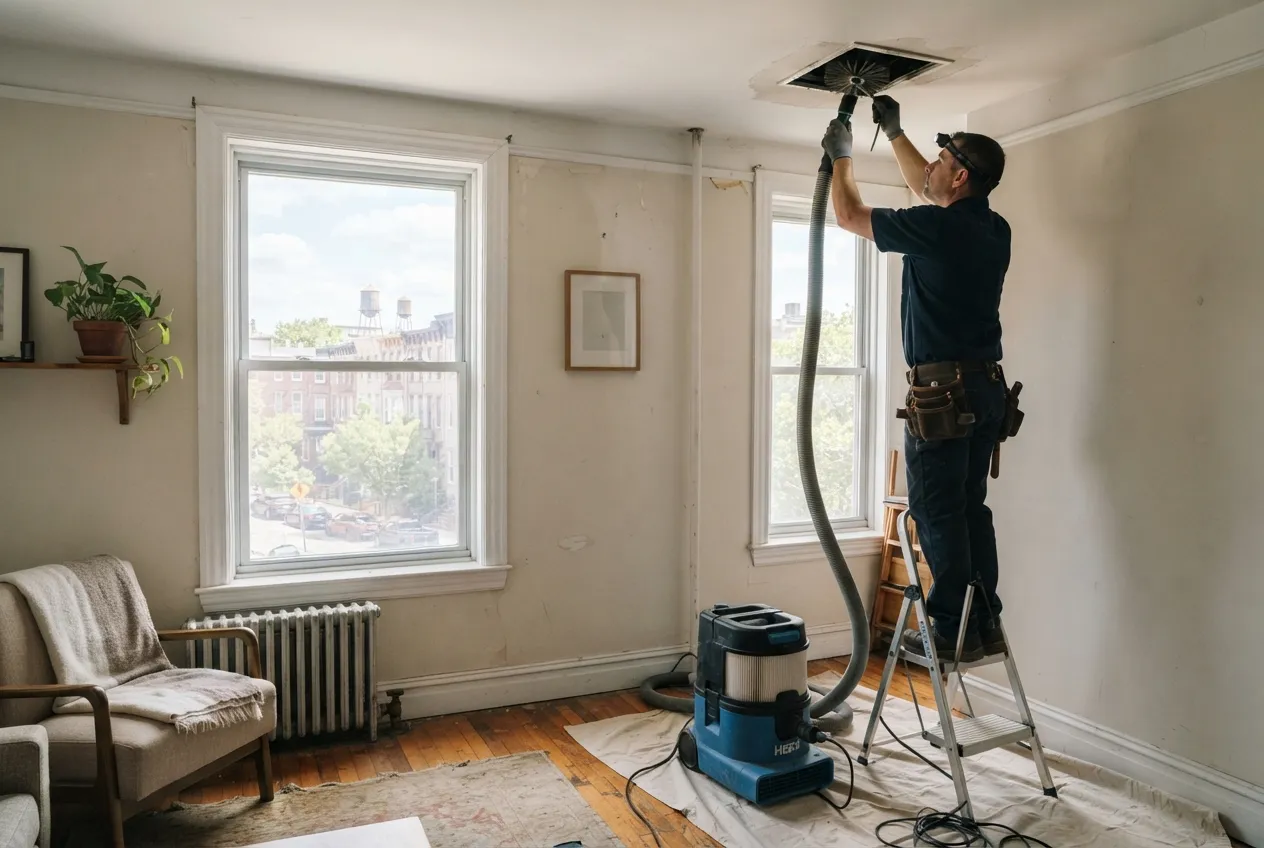
We treat your home like a workspace that has to be left the way we found it. Before we start, we lay drop cloths along the path to the laundry area and around the dryer. If the vent runs past other openings, we seal them off so loosened lint doesn't escape into the room.
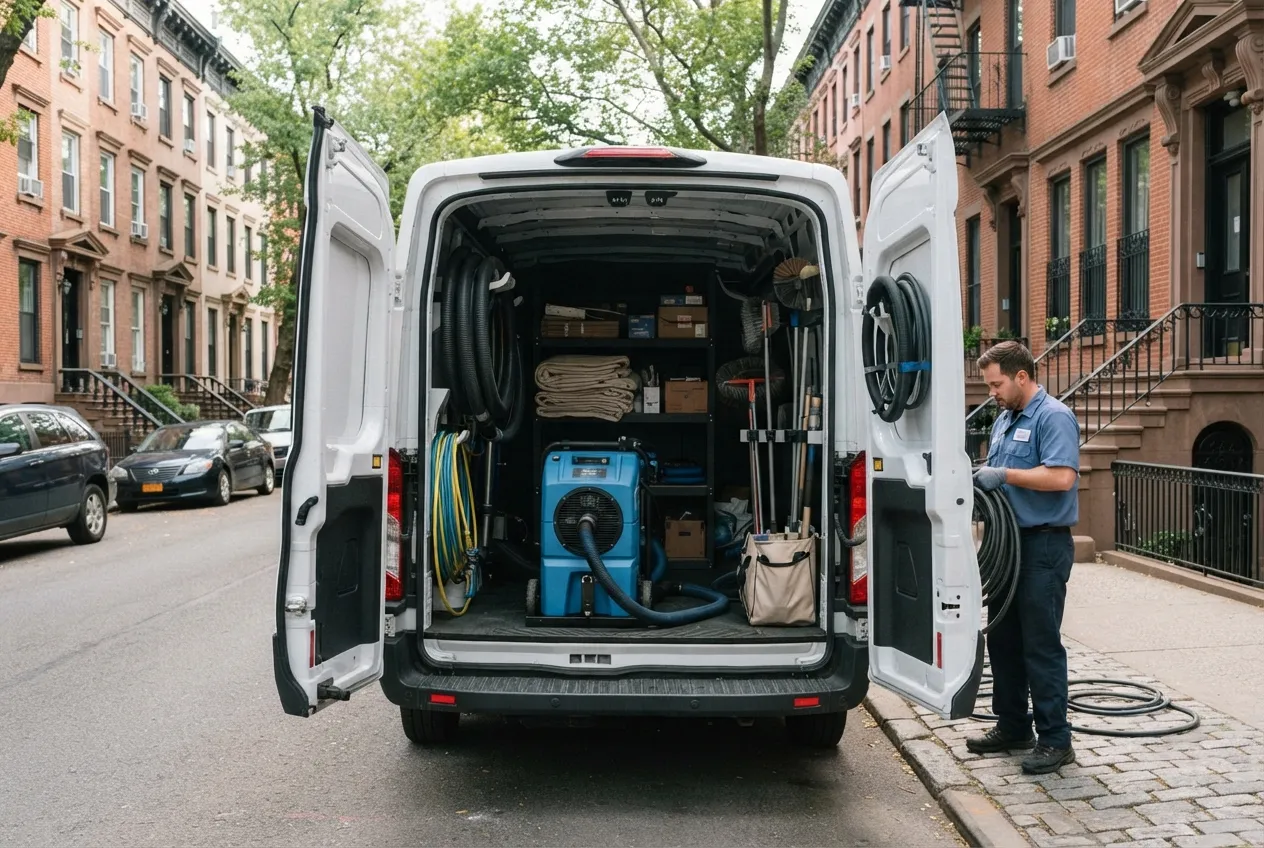
We connect a HEPA vacuum to the vent and run it under negative pressure. As the brushes loosen lint, the vacuum pulls it into the collection unit instead of into your home. We use rotary brushes sized to the duct to scrub the walls. For bends and tight sections where a rigid brush can't reach well, we use air whips. Where the layout allows, we run a camera through the vent to confirm it's clear and to look for crushed or separated sections.
In apartment buildings and co-ops, we coordinate with you and, if needed, your super or management office. That can include roof access, elevator use, or building work hours. When we're done, we remove our drop cloths, vacuum the work area, and put the dryer back in place.
What affects the price
Every dryer vent is a little different, so the cost depends on what we're working with. We'll give you a clear quote before any work starts. The main factors are:
- Vent length and the number of turns between the dryer and the outlet.
- Where the vent exits: a ground-level wall, an upper floor, or the roof.
- Access to the dryer and the outlet, such as a stacked unit in a closet or a tight laundry nook.
- Condition of the vent, including heavy buildup, nests, or damaged sections that need repair.
- Building type: a single-family house, a brownstone, or an apartment with building rules and access requirements.
- Whether you combine the visit with other services, such as air duct cleaning.
How a visit works
Booking is simple. Here's what to expect from start to finish:
- You reach out and tell us about your dryer (gas or electric), your building type, and where you think the vent exits.
- We schedule a visit and give you an arrival window. For apartments, we'll ask about roof access and any building rules.
- On arrival, a technician looks at the dryer, the connector, and the outlet, then confirms the scope and price with you.
- The crew sets up drop cloths, seals openings, and cleans the full vent run.
- We check airflow, reconnect the dryer, and run a test cycle.
- We walk you through what we found and point out any repairs worth considering.
Dryer Vent Cleaning by city
- Dryer Vent Cleaning in Greenpoint
- Dryer Vent Cleaning in Long Island City
- Dryer Vent Cleaning in Hunters Point
- Dryer Vent Cleaning in Williamsburg
- Dryer Vent Cleaning in Stuyvesant Town
- Dryer Vent Cleaning in Sunnyside
- Dryer Vent Cleaning in Peter Cooper Village
- Dryer Vent Cleaning in East Williamsburg
- Dryer Vent Cleaning in Murray Hill
- Dryer Vent Cleaning in Kips Bay
- Dryer Vent Cleaning in East Village
- Dryer Vent Cleaning in Gramercy