The short answer
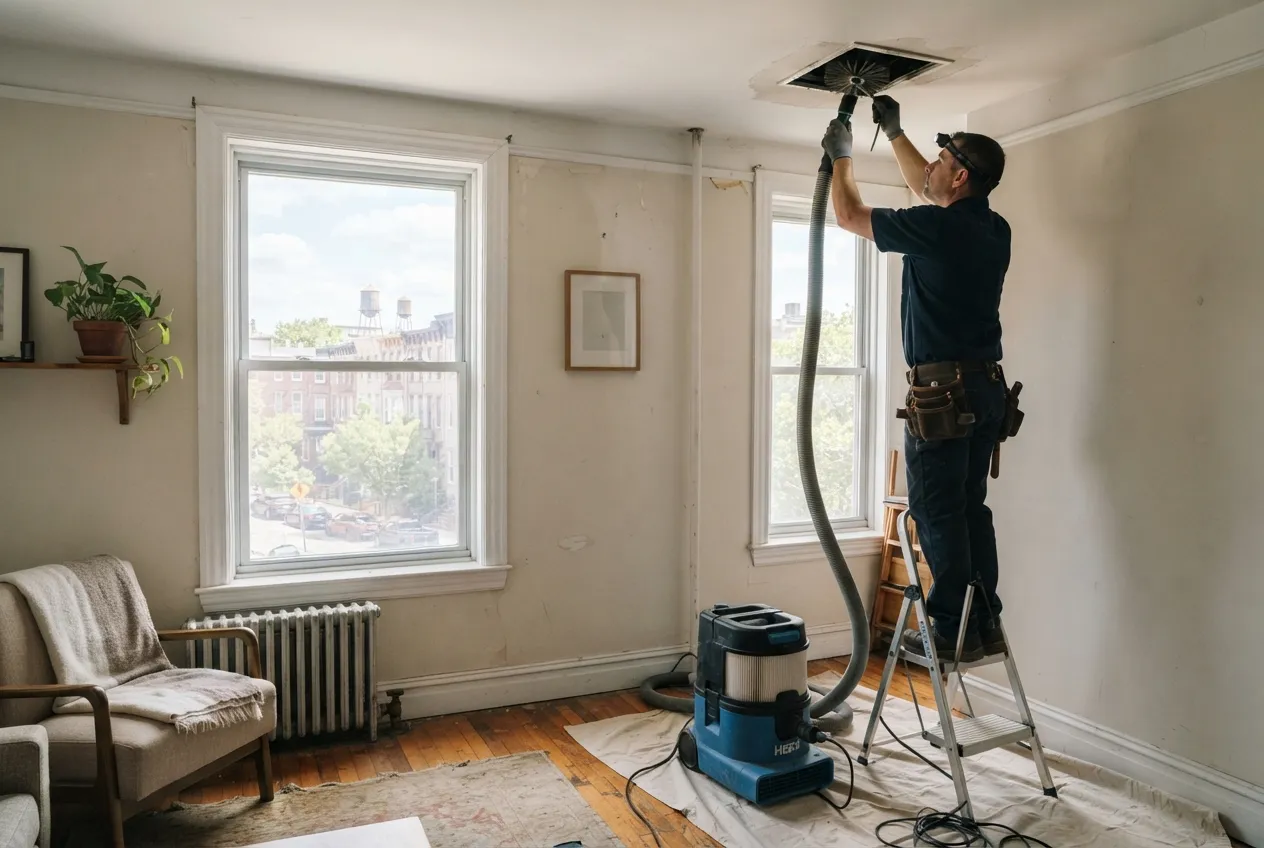
Air duct cleaning makes sense when your ducts have substantial dust or debris, signs of pests, or visible growth. MetroFlow cleans every supply and return run in Brooklyn homes and apartments. We seal the registers, use a HEPA vacuum under negative pressure and rotary brushes, and show you what we find.
Your air ducts carry all the air your heating and cooling system moves through your home. When they collect construction dust, debris or signs of pests, the system can push that material back out through the registers and into your rooms. MetroFlow cleans supply and return ducts in Brooklyn houses, brownstones, row houses, co-ops and apartments. Our equipment keeps loosened dust inside the system and out of your living space. If your ducts don't need cleaning, we'll tell you. This page covers the signs owners usually notice, what a cleaning includes, how our crew works inside your home, what affects the cost, and what to expect during a visit.
Signs You Need It
Most people call us because they've noticed something specific, not because a certain amount of time has passed. These signs usually mean your ducts are worth opening up and inspecting:
A musty smell or visible growth usually means moisture is getting into the system. We'll point out what we see, but the moisture source also has to be fixed. Otherwise the problem comes back after cleaning.
- Dust puffs out of the supply registers when the system turns on, or a new layer of dust settles on furniture a day or two after you clean.
- Renovation dust, such as drywall, plaster or sawdust, got into open registers or returns during a remodel, floor sanding or demolition.
- There's debris or evidence of pests in the ducts, such as droppings, nesting material, insects, or objects that fell through a floor register.
- You smell something musty or burnt when the heat or air conditioning starts, especially if the smell is stronger near certain vents.
- Some registers have weak airflow while others blow normally. This can point to a blockage, a crushed section or a disconnected run.
- You can see growth on register covers, inside the return, or around the air handler.
What's Included
A standard MetroFlow air duct cleaning covers the whole air path, not just the vents you can see. Here's what the visit includes:
- A walk-through and inspection of registers, returns and accessible duct runs before work starts
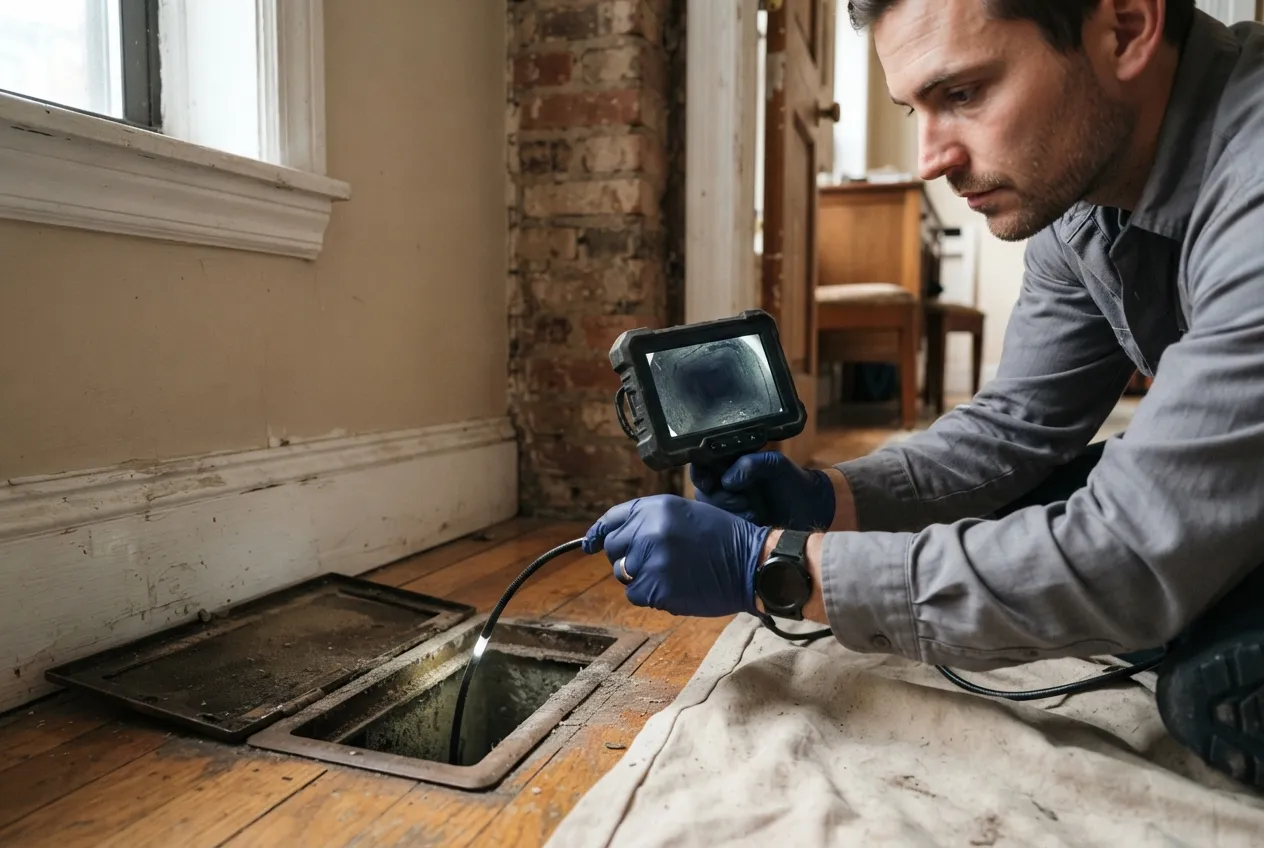
- A camera inspection of duct interiors where access allows, so you can see the condition before cleaning
- Cleaning of every supply duct and return duct in the system
- Removing, washing and reinstalling register and grille covers
- Cleaning the supply plenum and the return plenum
- Cleaning the blower compartment and accessible surfaces of the air handler
- Removing debris, nesting material and any objects found in the lines
- Checking the filter and replacing it if you have the right size on hand or ask us to bring one
- A final airflow check at the registers
- Notes on any damaged, disconnected or poorly sealed duct sections we find
How Our Crew Works Inside Your Home or Apartment
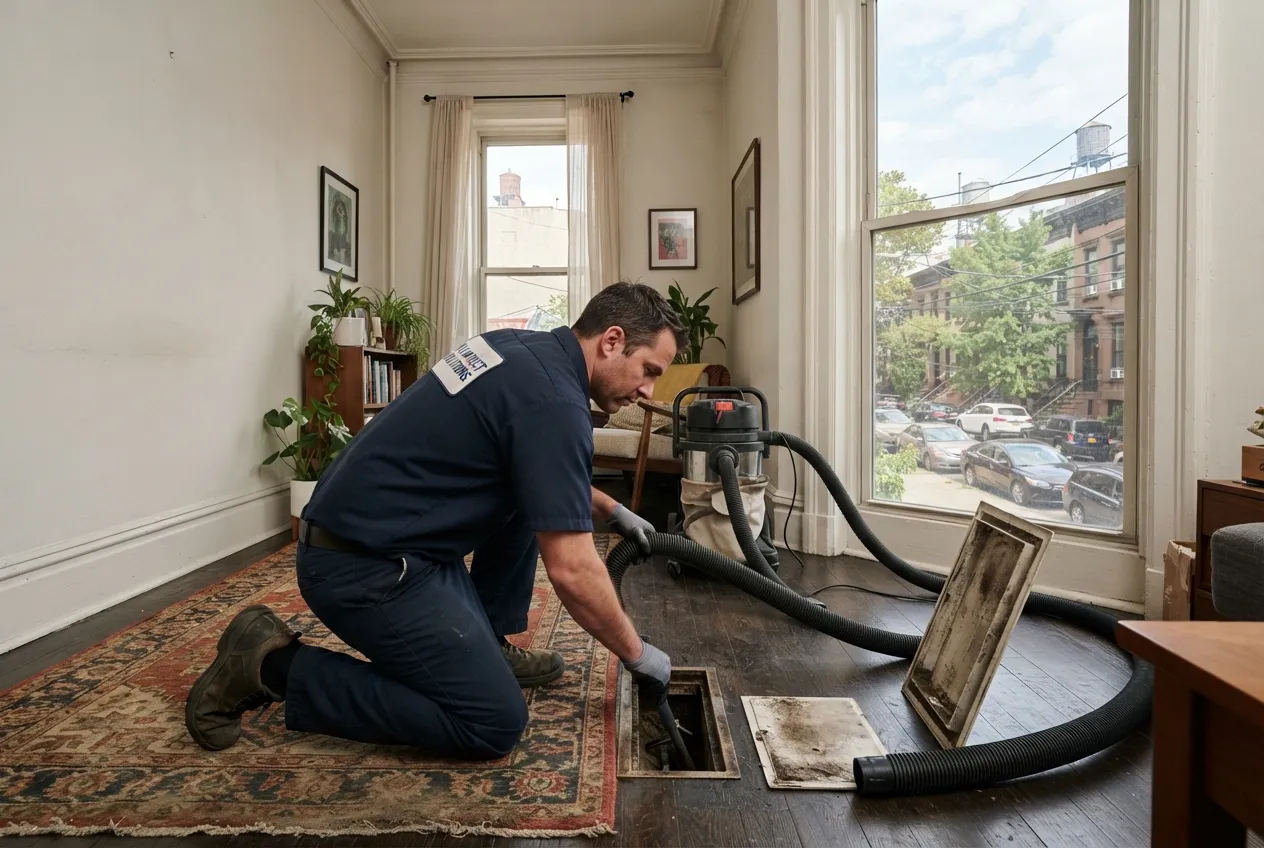
Before any equipment comes in, our certified technicians lay drop cloths along the path from your door to the work area and around each register. In apartment buildings and co-ops, we protect hallways and elevators the way your building requires.
Next, we cover and seal the supply registers and returns so loosened dust can't escape into your rooms. Then we connect a HEPA-filtered vacuum to the main trunk line. The vacuum keeps the ducts under negative pressure, which means air is always being pulled toward the vacuum. Debris moves away from your living space instead of out through the vents.
While the system is under suction, we clean each run with rotary brushes and air whips. The brushes scrub dust off the duct walls. The air whips use compressed air to knock material loose in bends and branches a brush can't reach. The vacuum then pulls everything out. Where the ducts allow it, we run a camera through before and after cleaning so you can see the difference yourself.
If there's a reason to sanitize, such as a lingering odor, evidence of pests or visible growth, we'll discuss it with you first. We only use products registered for that use, and only when there's a reason. We don't apply sanitizers as a routine add-on.
Ready for cleaner ducts?
What the EPA Says About Duct Cleaning
The U.S. Environmental Protection Agency advises cleaning air ducts when there is substantial visible mold growth, vermin, or excessive dust and debris. We look for the same conditions during our inspection.
The EPA also says duct cleaning has not been shown to prevent health problems, so we don't promise any health benefits. The agency recommends that homeowners research the process before responding to very cheap advertised offers, and that they be careful with chemical treatments. We follow the same approach. We explain the work before we start, show you what we find, and recommend a treatment only when there's a clear reason for it.
What Affects the Price
Every home is set up differently, so we give you a price once we know what the job involves. These are the main factors:
You'll know the price before work begins. If we find something that changes the scope, we stop and talk with you before going further.
- The number of supply and return vents in the system
- Duct length and access, since long runs, tight attics, finished ceilings and ducts behind walls take more time
- The condition of the ducts, including heavy renovation dust, pest debris or visible growth
- Building type, such as a single-family house, a multi-floor brownstone, or an apartment with building access rules and elevator scheduling
- Whether your home has more than one system or air handler
How a Visit Works
First, you contact us and describe what you're noticing. We'll ask about your home type, how many vents you have and where the equipment is located, and then we'll set a time. For apartments, we can coordinate with building management about access and protecting common areas.
On the day of the visit, the crew arrives, protects your floors and inspects the system with you. Once we confirm the scope, we seal the registers, connect the vacuum and clean each run. Then we clean the plenums and blower area, wash the register covers and put them back.
At the end, we check airflow, clean up the work area, and walk you through what we found, including any repairs worth considering. New York City's heat season runs from October 1 through May 31, and many owners like to have their ducts cleaned before it starts or before they turn on the air conditioning. You can book any time of year, though, if you're seeing the signs above.
Air Duct Cleaning by city
- Air Duct Cleaning in Greenpoint
- Air Duct Cleaning in Long Island City
- Air Duct Cleaning in Hunters Point
- Air Duct Cleaning in Williamsburg
- Air Duct Cleaning in Stuyvesant Town
- Air Duct Cleaning in Sunnyside
- Air Duct Cleaning in Peter Cooper Village
- Air Duct Cleaning in East Williamsburg
- Air Duct Cleaning in Murray Hill
- Air Duct Cleaning in Kips Bay
- Air Duct Cleaning in East Village
- Air Duct Cleaning in Gramercy