The short answer
Dryer vent repair and rerouting fixes crushed, disconnected, overly long or badly routed vent lines so the dryer can push lint and moist air outdoors. Our certified technicians clean the full run, replace damaged sections with metal duct, fix the exterior cap, and shorten or straighten the path where the layout allows.
A dryer vent has one job: carry hot, damp, lint-filled air from the dryer to the outdoors. That job gets harder and lint starts to build up when the duct is crushed behind the machine, runs too far, has too many turns, or ends at an exterior cap that sticks shut. MetroFlow repairs damaged dryer vents and reroutes poorly installed runs in houses, brownstones and apartments across Brooklyn and nearby neighborhoods. Runs that no longer fit the room after a renovation get rerouted too. We clean the full line and fix or replace what's failing. Wherever the building allows, we leave you with a shorter, smoother path to the outside.
Signs you need it
Most owners call us after they notice their laundry routine has changed. The signs below usually point to a vent problem rather than a problem with the dryer itself.
If you smell something burning, stop using the dryer until the vent has been checked.
- Clothes take longer to dry, or come out damp at the seams and pockets
- The dryer, or the room around it, gets unusually hot while it runs
- A burnt or scorched smell during or after a cycle
- Weak airflow at the outside hood, or a flap that barely opens
- Lint collecting behind the dryer, on the floor, or around the exterior cap
- Nesting material, debris, or signs of birds or rodents at the vent opening
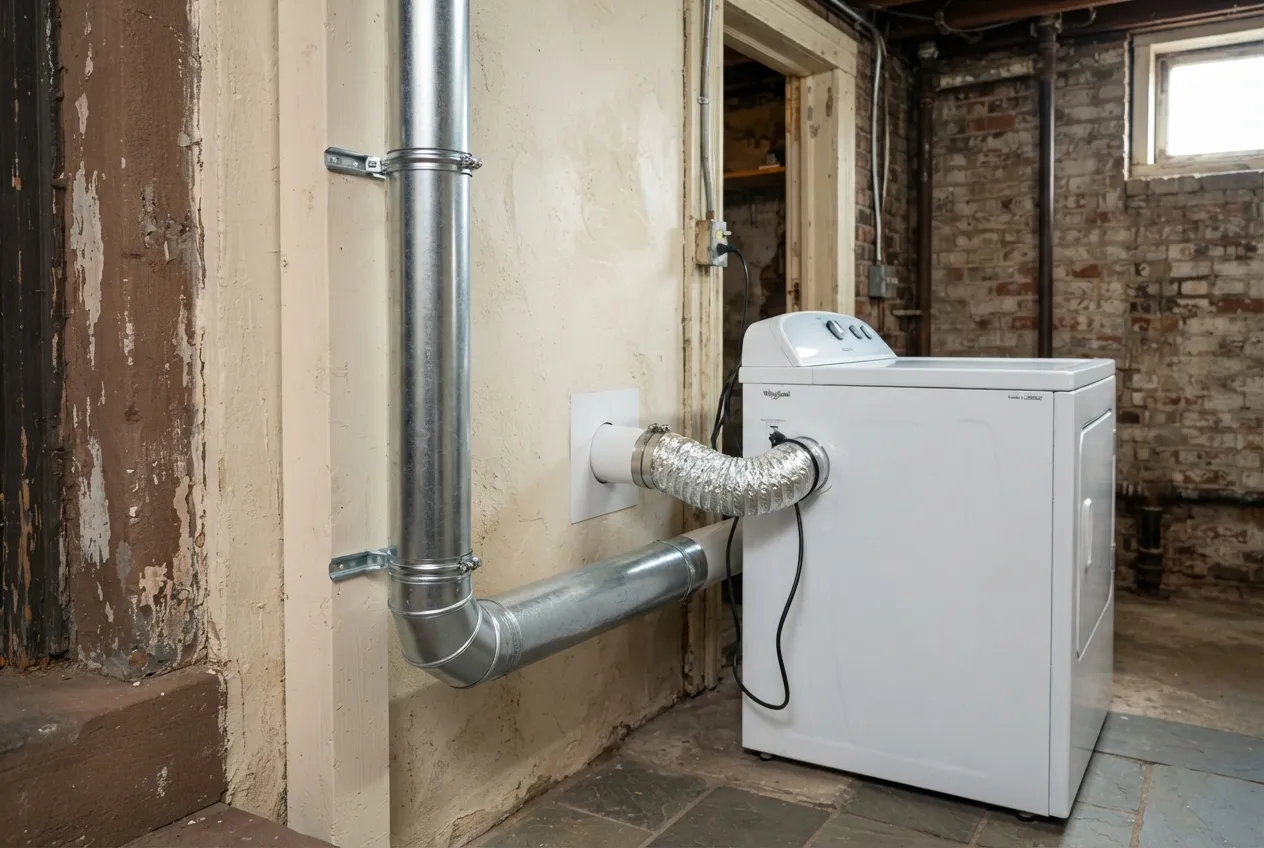
- A foil or plastic hose that is crushed, kinked, or pulled loose behind the machine
- A musty smell or extra moisture in the laundry area
What's included
Every repair and rerouting visit covers the whole system, from the back of the dryer to the outside wall or roof:
- Inspection of the full run, from the dryer connection to the exterior termination
- Camera inspection of concealed sections we can reach
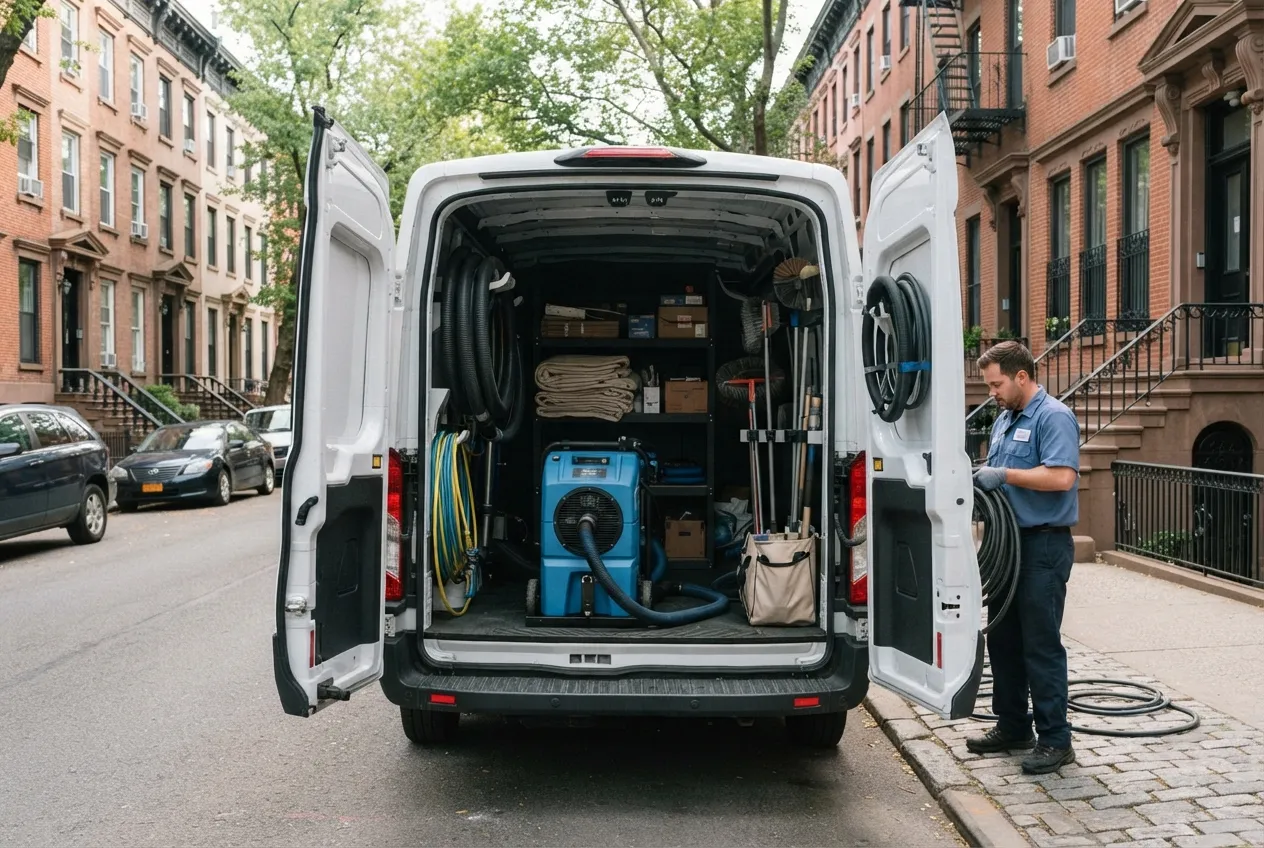
- Cleaning of the entire line with rotary brushes and air whips, with lint captured by a HEPA vacuum
- Removal of nests, lint plugs and debris from the duct and exterior cap
- Replacement of plastic, foil or crushed transition hose with a metal connector
- Repair or replacement of damaged duct sections, with joints sealed with foil tape instead of screws that snag lint
- Rerouting to a shorter path or fewer bends where the layout allows
- Replacement of a stuck, broken or screened exterior hood with a damper-style cap
- An airflow check at the exterior once the work is done
- Photos and a plain-language summary of what we found and what we did
How we work inside your home or apartment
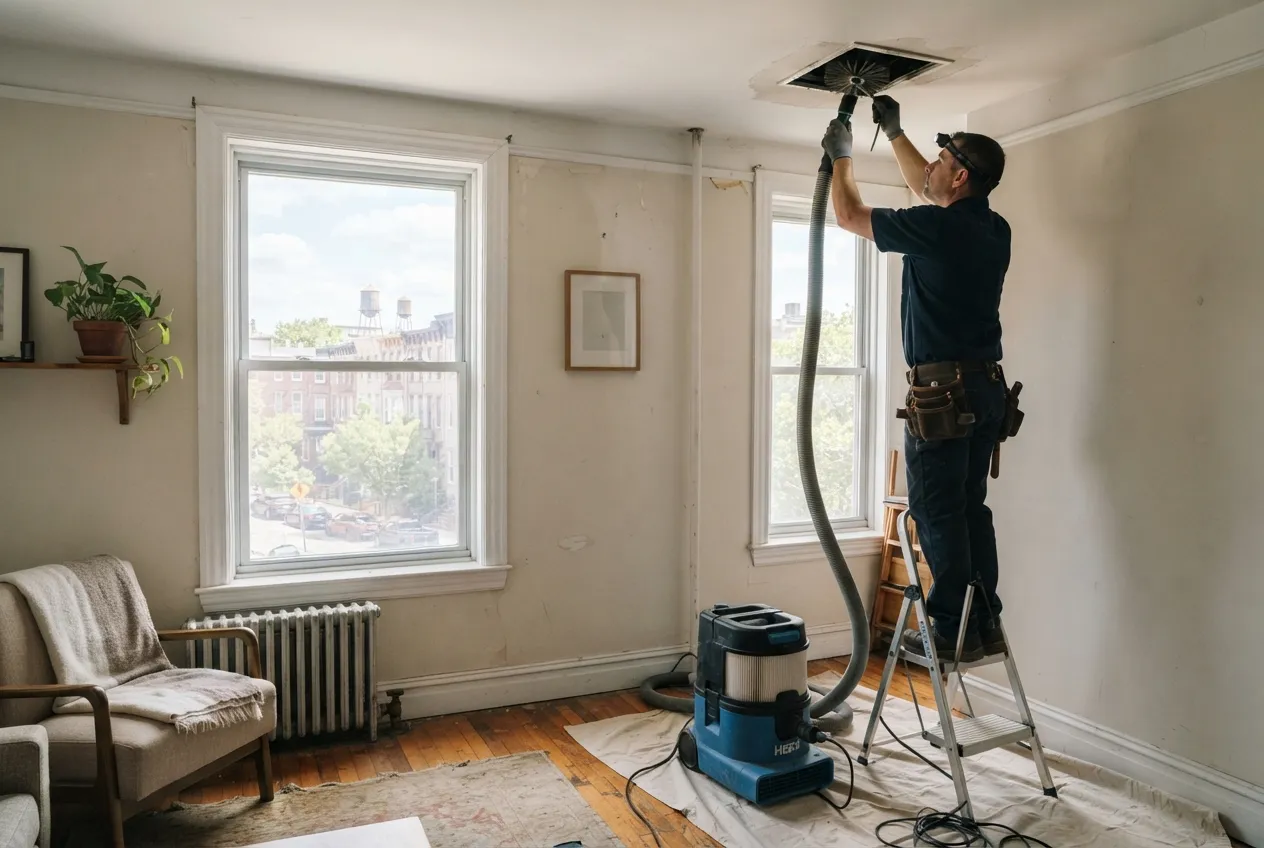
We lay drop cloths from the entry to the laundry area before anything is moved. Then we carefully pull the dryer out, disconnect it from the vent, and cover nearby registers and openings so loosened lint doesn't drift into the rest of the home.
A HEPA vacuum runs under negative pressure at one end of the line while rotary brushes and air whips work from the other. The brushes and whips push lint toward the vacuum instead of into your room. On hidden runs inside walls, ceilings or closets, we use a camera to look for crushed spots, separated joints and blockages before deciding what to repair or reroute.
In apartment buildings, we work around the building's rules for elevators, hallways and work hours. If management needs advance notice or paperwork, we can coordinate with them.
Sanitizing is rarely part of a dryer vent job. We use it only when there is a reason, such as a lingering odor or evidence of pests, and only with products registered for that use.
Ready for cleaner ducts?
Why a clear vent matters
According to the U.S. Fire Administration, failure to clean is the leading factor contributing to clothes dryer fires in homes. Lint is light and burns easily. It collects wherever air slows down, and in a vent that usually means a crushed hose, a sagging section, a sharp turn or a clogged cap.
Repairs and rerouting go after those slow spots. A shorter, smoother metal run with fewer bends gives lint less room to settle. It also makes the next cleaning simpler. Cleaning the lint screen after every load still matters, but the screen doesn't catch everything.
What affects the price
We don't quote a number until we've seen the run, because a few things change the amount of work:
- The length of the run and the number of bends
- Access: whether the vent sits behind a stacked unit, inside a finished wall or ceiling, or exits through the roof
- Condition: how much lint has built up, whether there are nests, and how much duct needs replacing
- Whether rerouting needs a new opening through a wall
- Building type: a single-family house, a brownstone, or a co-op or condo with building requirements
- Add-on work such as air duct cleaning, where the number of supply and return vents matters
How a visit works
When you reach out, we ask a few questions about where your dryer sits, where the vent exits and what you've noticed. Photos help if you can send them. We then schedule a visit at a time that works for you and your building.
On site, the technician inspects the full run first. They walk you through what they found and explain the repair or reroute options before starting any work beyond cleaning.
After the work is done, we reconnect the dryer, check airflow at the exterior, clean up the work area, and give you photos and a summary to keep for your records.