The short answer
A chimney sweep removes soot, creosote and debris so smoke and boiler exhaust can leave your home safely. NFPA 211 calls for a yearly chimney inspection, and Long Island City homes should schedule one before the October 1 start of heat season or before converting a boiler from oil to gas.
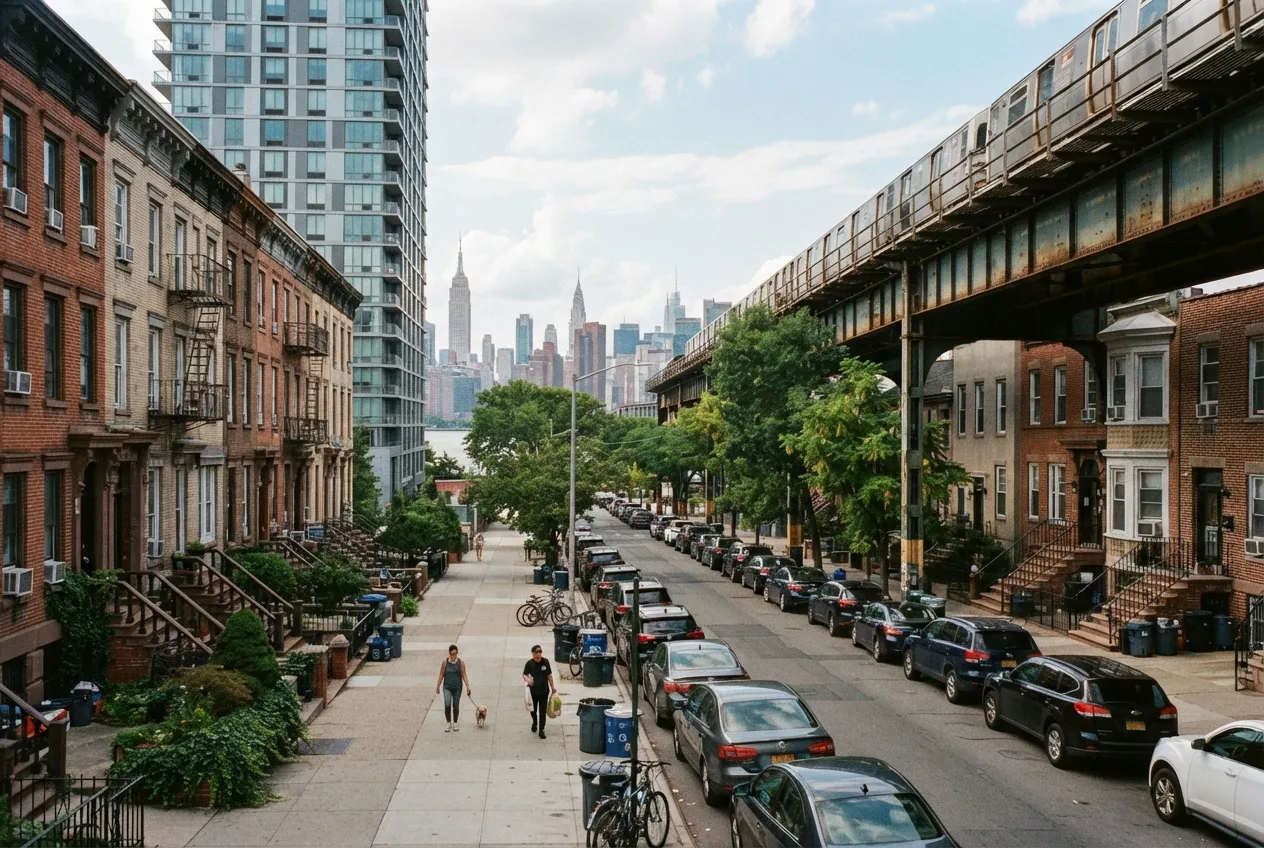
Long Island City has a mix of older rowhouses, two- and three-family homes, pre-war apartment buildings and newer residential towers. Many of the older homes still have a working fireplace or a masonry chimney that vents a boiler or water heater, and those flues need regular cleaning and a yearly check. MetroFlow sends certified technicians from our office in Greenpoint, Brooklyn, about a mile south of the neighborhood. We sweep the flue, look over the chimney, and tell you plainly what we found.
What a Chimney Sweep Includes
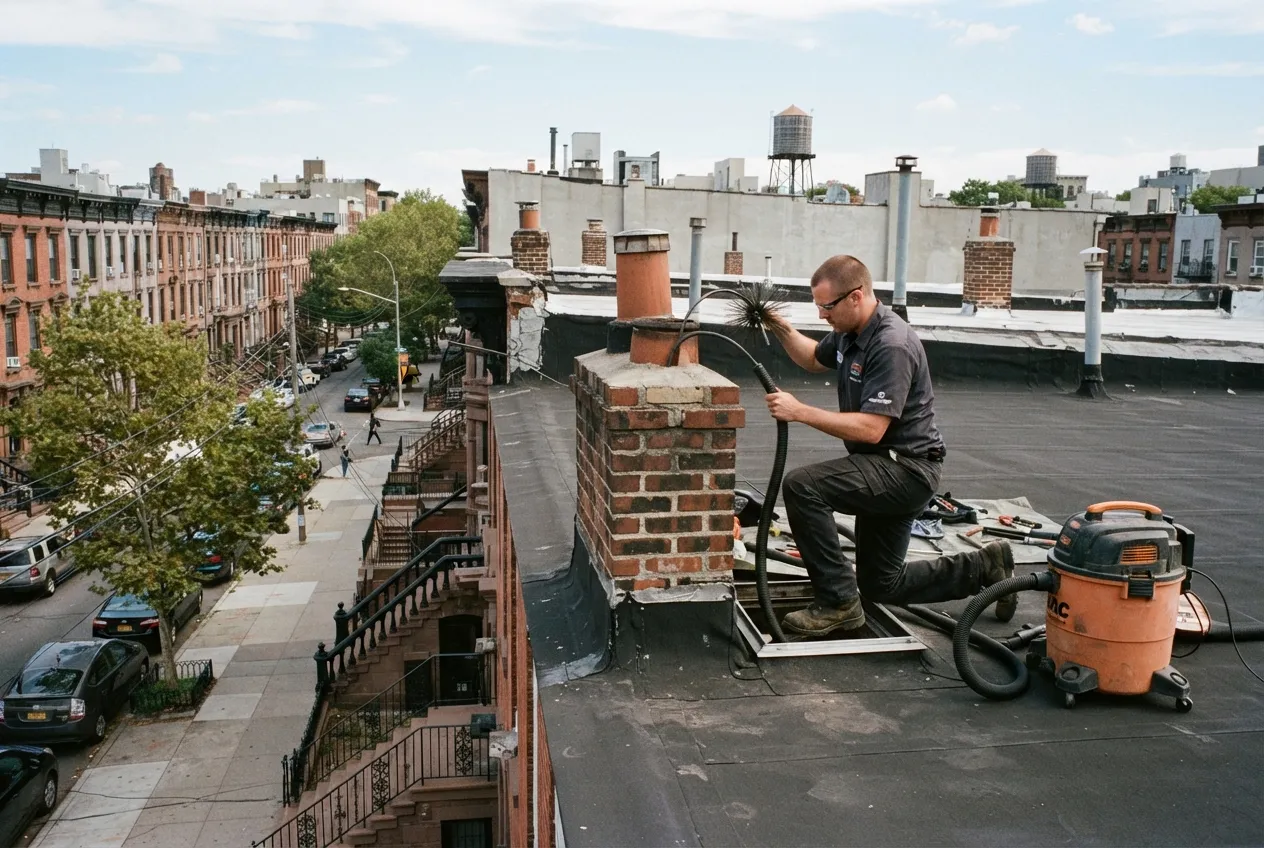
A sweep removes soot, creosote and debris from the flue so smoke and exhaust can move up and out of the house. In a wood-burning fireplace, creosote builds up on the flue walls with each fire, and heavy deposits can ignite. In a chimney that vents a gas or oil boiler, the usual problems are soot, flaking masonry or nesting material that narrows the flue and can push exhaust back into the home.
We clean the flue from the firebox or the cleanout, then check the damper, smoke shelf and chimney cap, and look at the liner where it can be seen. If anything needs more than a cleaning, we explain what we found and what your options are before any other work is discussed.
- Fireplace flues in rowhouses and multifamily homes
- Boiler and water heater flues in older buildings
- Cleanout doors and smoke chambers
- Chimney caps and screens that keep out birds and debris
Yearly Inspections and the Three Levels
The NFPA 211 standard calls for chimneys, fireplaces and vents to be inspected once a year, and a sweep is a convenient time to do it. A Level 1 inspection covers the readily accessible parts of the chimney. It is the right fit when nothing about your system has changed.
A Level 2 inspection is called for when something does change, such as a new boiler or stove, a switch from oil to gas, or the sale of the home. A Level 3 inspection is needed only when a hidden hazard has to be reached by opening part of the chimney or building. That is uncommon, and we will tell you why if we think it applies.
Oil-to-Gas Conversions in Long Island City Buildings
Many older buildings in the neighborhood have switched from heating oil to gas, or are planning to. When a New York City building converts its boiler from oil to gas, the chimney has to be evaluated as part of the job. Gas exhaust produces acidic condensate that can corrode a masonry flue, so a new liner is often needed.
If you are planning a conversion, have the chimney swept and inspected early so liner questions don't hold up the boiler work. We will tell you what we see inside the flue and whether it looks ready for gas exhaust.
Ready for cleaner ducts?
Timing Around Heat Season
New York City's heat season runs from October 1 through May 31. During those months, building owners must keep apartments heated to the city's minimum temperatures. For owners of rowhouses and multifamily buildings with tenants, that means the boiler has to run reliably for most of the year. A blocked or damaged flue is not something you want to discover in January.
Late summer and early fall are the easiest times to schedule a sweep before the heat comes on. If you use your fireplace often, a spring cleaning after the burning season also keeps creosote and odors from sitting in the flue all summer.
Signs Your Chimney Needs Attention
Schedule a sweep and inspection if you notice any of these:
- A smoky smell indoors, or smoke that drifts into the room instead of drawing up
- Black flakes or crumbs of creosote falling into the firebox
- Water stains, loose bricks or crumbling mortar near the chimney
- Scratching or chirping sounds that suggest an animal or nest in the flue
- Soot around the spot where the boiler connects to the chimney
- No inspection in more than a year
Where We Work Around Long Island City
We serve homes in ZIP codes 11101 and 11109, along with nearby Hunters Point, Sunnyside and Greenpoint. Across the East River, we also work in Murray Hill and Kips Bay in Manhattan. Our crew comes from Greenpoint, so the trip to Long Island City is short.
More services in Long Island City
- Air Duct Cleaning in Long Island City
- Dryer Vent Cleaning in Long Island City
- HVAC System Cleaning in Long Island City
- Duct Sanitizing & Odor Removal in Long Island City