The short answer
A chimney inspection checks your flue, liner, damper, crown and cap for cracks, blockages and buildup that can send smoke or exhaust gases back into your home. The NFPA 211 standard calls for an inspection once a year. MetroFlow's certified technicians protect your home with drop cloths and a HEPA vacuum, inspect the flue with a camera, and give you a written report.
Your chimney carries smoke and exhaust gases out of the house, and most of it is hidden behind masonry where you can't see what's going on. A chimney inspection is a close look at the flue, liner, smoke chamber, damper, crown and cap to find cracks, blockages, buildup and damage before they cause bigger trouble. MetroFlow inspects wood-burning fireplace chimneys and the flues that vent boilers, furnaces and water heaters. We work in brownstones, row houses, frame houses and apartment buildings across Brooklyn and nearby neighborhoods. Our certified technicians explain what they find in plain terms, show you photos or camera footage, and tell you which issues need attention now and which can wait.
Signs you need a chimney inspection
Many chimney problems give small warnings first. If you notice any of the following, schedule an inspection before your next fire or before the heating system starts running hard for the winter.
- A smoky, burnt or sour smell from the fireplace, especially on humid days or when the heat comes on
- A musty odor or damp stains on the wall or ceiling near the chimney
- Smoke that rolls back into the room instead of drawing up the flue
- Pieces of mortar or tile, or flakes of black soot, falling into the firebox
- Sounds of birds, squirrels or raccoons, or nesting material in the fireplace
- A damper that sticks, won't close fully, or lets in cold drafts
- Cracked or crumbling brick, a leaning stack, or a damaged cap you can see from the street
- A new boiler, water heater or stove, a switch from oil to gas, or a home you are buying or selling
What a chimney inspection includes
A standard inspection covers the whole system, from the firebox or appliance connection to the top of the stack. You get a written summary with photos.
- Firebox, hearth and fireplace opening checked for cracks, gaps and heat damage
- Damper opened, closed and checked for rust, warping and a proper seal
- Smoke chamber and smoke shelf checked for buildup, debris and cracked or rough parging
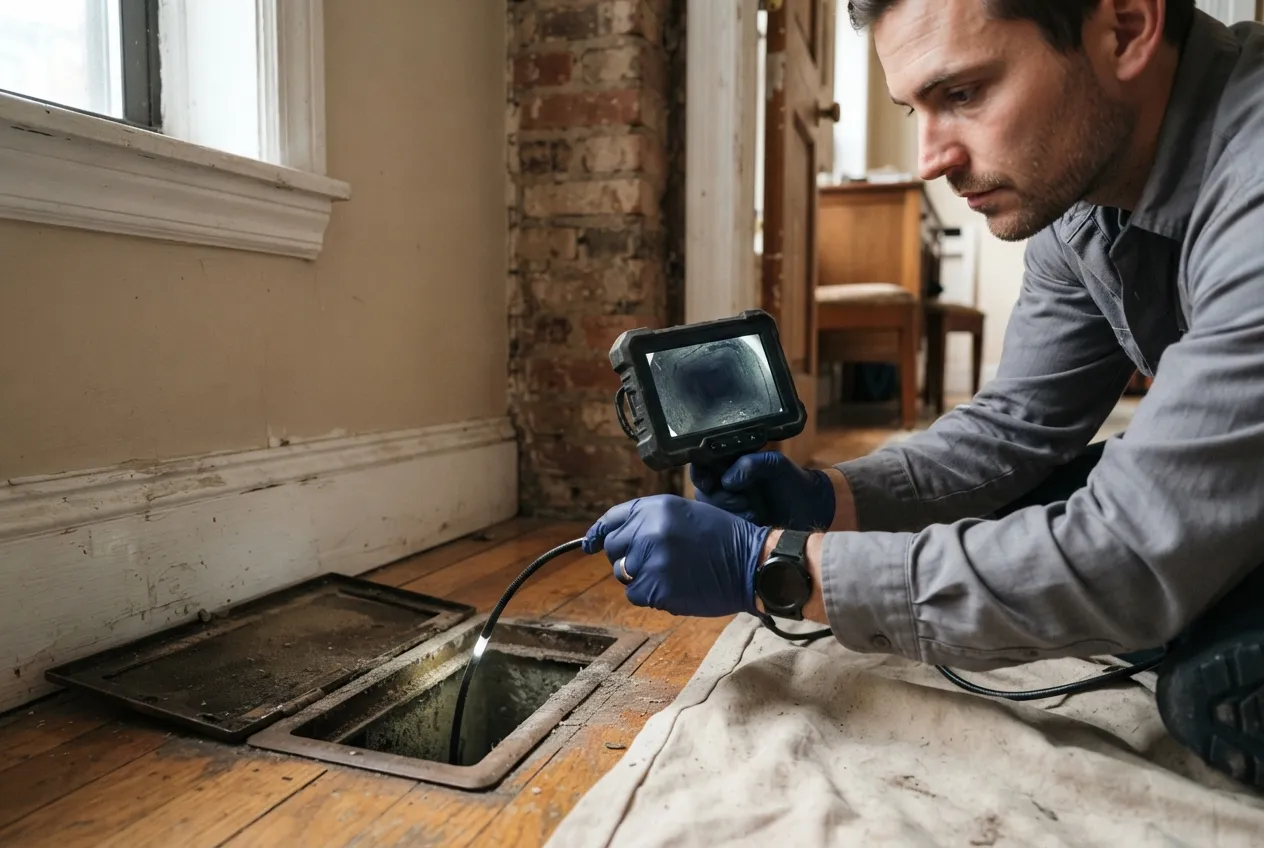
- Flue liner checked along its length for cracks, missing mortar joints, gaps and blockages, using a camera where the flue allows
- Creosote and soot buildup noted, with a recommendation on whether sweeping is needed
- Connector pipe and thimble checked on boiler, furnace and water heater flues
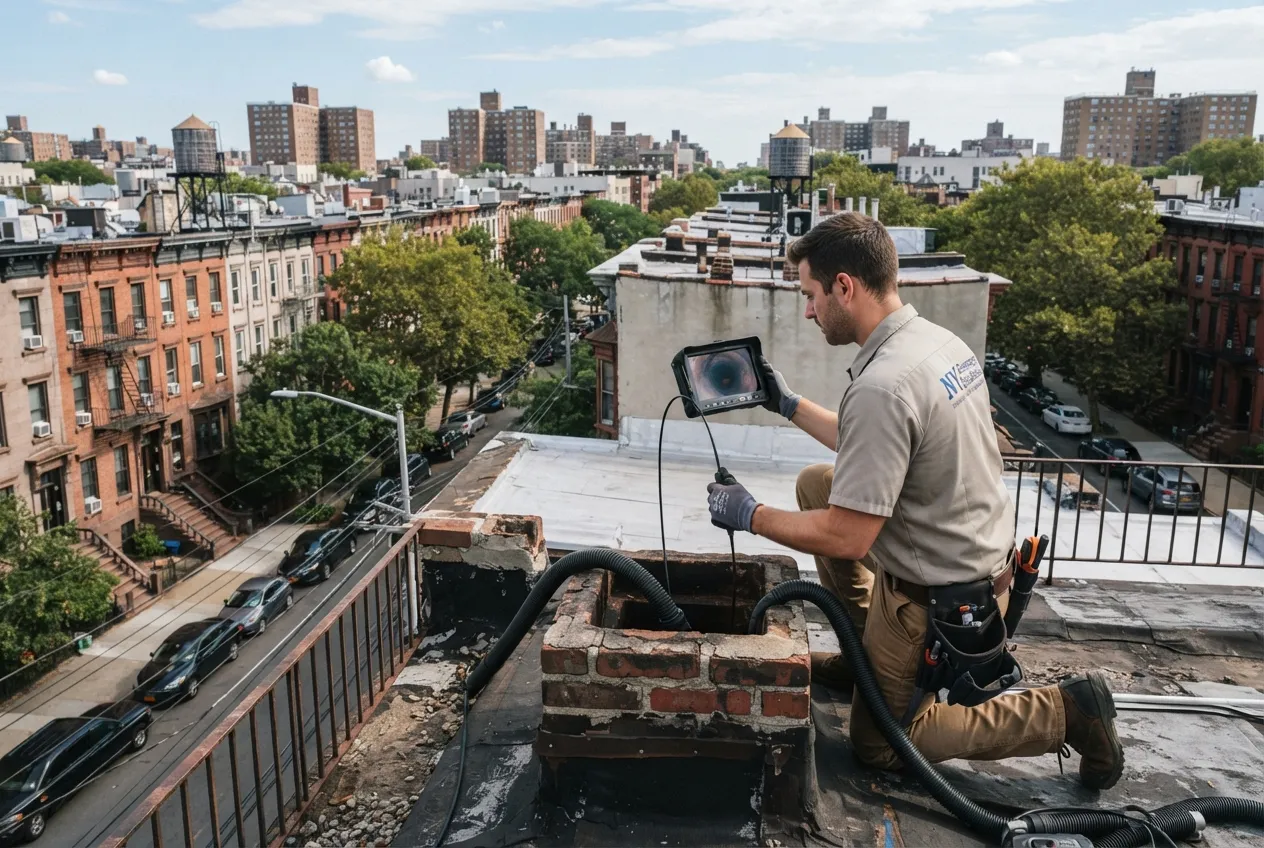
- Crown, cap, spark arrestor and flashing checked from the roof where safe access exists
- Exterior brick and mortar checked for spalling, open joints and signs of water getting in
- Clearances to nearby wood framing and combustible materials checked where they can be reached
- Written findings, photos and plain-language recommendations
How our crew works inside your home or apartment
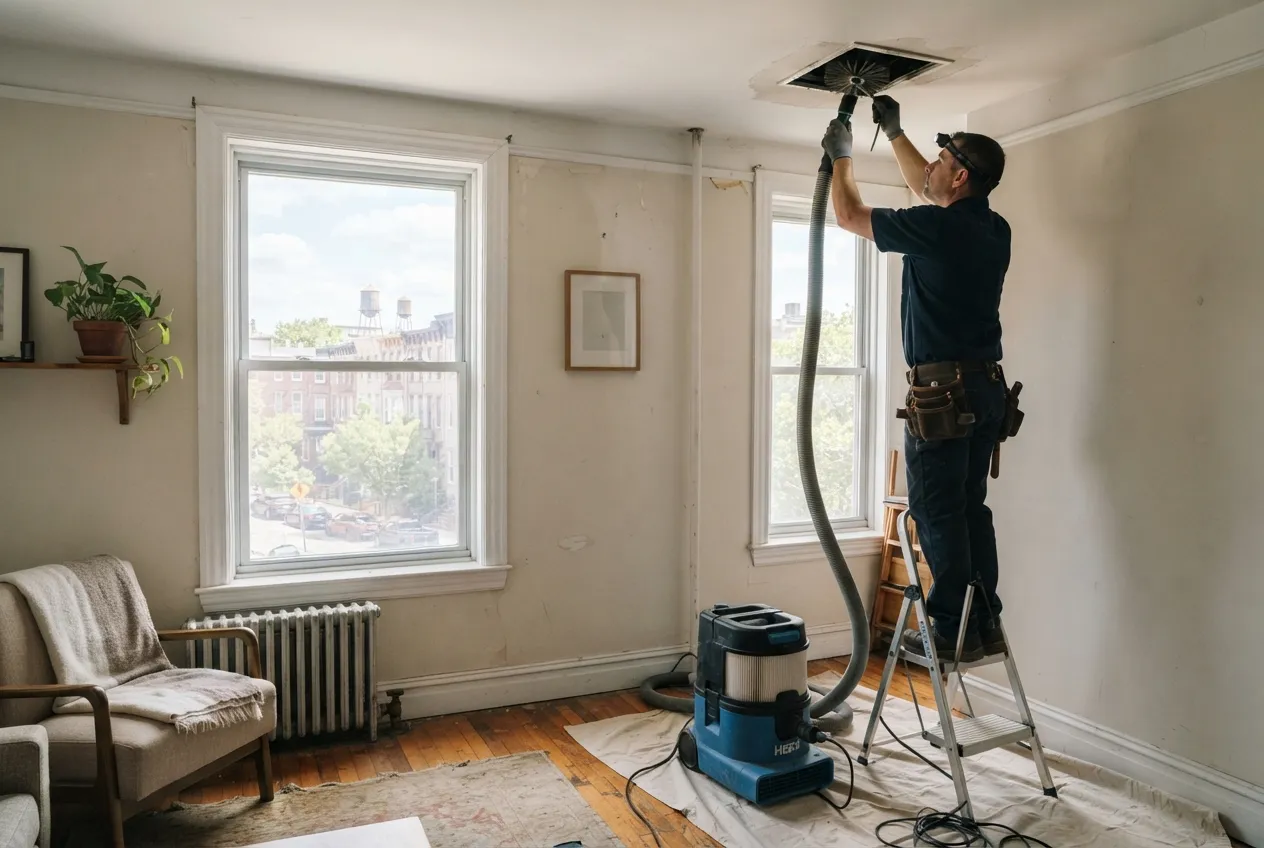
Before any work starts, the crew lays drop cloths from your entry to the fireplace or boiler room and covers nearby furniture. If the visit includes brushing or sweeping, we seal the fireplace opening with plastic sheeting and tape. We also close off nearby registers and openings so soot does not drift into the room.
Loose soot and debris are collected with a HEPA vacuum running under negative pressure. That means air is pulled into the machine instead of dust being pushed back into your home. When a section of flue has to be cleared so the liner surface can be seen, we use rotary brushes and air whips. The camera then goes up the flue on a flexible rod and records the areas you can't see from the firebox or the roof.
In apartment buildings we coordinate with the super or management for roof and boiler room access, and we keep hallways and elevators covered and clear. When we finish, we vacuum the work area, and the drop cloths come up last.
If an odor comes from an animal nest or other debris, we remove the material first. We use sanitizing or deodorizing products only when there is a reason, such as an odor, pests or visible growth, and only products registered for that use.
Ready for cleaner ducts?
Why a yearly inspection matters
The NFPA 211 standard calls for chimneys, fireplaces and vents to be inspected once a year. This applies whether you burn wood every weekend or only vent a gas boiler through the chimney. Chimney professionals use three inspection levels, listed below, and we'll tell you which one fits your situation.
Fuel conversions need special attention in Brooklyn. When a New York City building converts its boiler from oil to gas, the chimney has to be evaluated as part of the work. A new liner is often needed, because gas exhaust produces acidic condensate that can corrode a masonry flue.
New York City's heat season runs from October 1 through May 31. Late summer or early fall is a practical time to inspect, before the boiler starts running every day.
- Level 1: nothing has changed in the system, and you use it the same way as before
- Level 2: the system has changed, such as a new appliance or a switch of fuel, or the home is being sold
- Level 3: a hidden hazard has to be reached by opening part of the chimney or the building
What affects the price
We give you a quote once we know a few details about your chimney. The main factors are:
- The inspection level needed
- How many flues the chimney has, and what each one vents: a fireplace, boiler, furnace or water heater
- Chimney height, and how easy it is to reach the roof and the appliance connections
- The condition of the system, including heavy creosote, debris or nests that must be cleared before the liner can be seen
- Building type: a single-family house, a multi-family row house, or an apartment building with shared roof access
- Whether sweeping or a recorded camera inspection is added to the visit
How a visit works
Most visits follow the same steps. Please let the fireplace go cold before we arrive, ideally for a full day. If the flue serves a boiler or water heater, our technician will handle any shutdown needed to check the connections safely.
- Scheduling: tell us what the chimney vents, any symptoms you've noticed, and how to reach the roof
- Arrival and setup: drop cloths, sealing, and a quick walk-through with you
- Inspection: firebox, damper, smoke chamber, flue, appliance connections, roof and exterior
- Review: we show you the photos or footage and explain what we found
- Report: written findings and recommendations, plus a quote for any cleaning or repairs you choose to do