
When Air Duct Cleaning Is Worth It (and When It Isn't)
Serving Brooklyn and nearby cities.
- Diagnosis before any repair
- Written price up front
- Written price before we start
Air duct cleaning gets sold hard, and a lot of what you hear about it is overstated. This guide is meant to help you decide whether your home actually needs it. Sometimes the answer is yes: there is mold you can see, mice have been in the system, or a renovation filled the ducts with drywall dust. Often the answer is no, and a fresh filter and a quick look at the system are all you need. We would rather you book a cleaning when it solves a real problem than pay for work that doesn't.
Signs your ducts really do need cleaning
The U.S. EPA advises cleaning air ducts in three situations: substantial visible mold growth, vermin, or excessive dust and debris. Those are the cases where cleaning removes something you can actually point to. In Brooklyn homes, that usually looks like one of the following.
- Visible mold growth inside sheet metal ducts, on the coil, or around the air handler. Cleaning only helps if the moisture problem behind it is fixed too.
- Mice, insects or other pests in the ductwork, including droppings, nesting material or chewed insulation.
- Heavy dust and debris after a renovation, especially drywall sanding, floor refinishing or demolition done while the system was running.
- A newly purchased home with unknown history, where an inspection turns up debris, pest signs or neglected equipment.
- Dust visibly puffing out of supply registers when the system starts, even with a clean filter in place.
- A persistent musty odor coming from the vents. The smell points to moisture, so the source needs to be found before cleaning makes sense.
When cleaning usually isn't needed
A little dust on the register grilles is normal. So is a gray film inside the first few inches of a duct. Neither one means the whole system is dirty. Wiping the grilles and vacuuming the return opening takes care of most of it.
Cleaning also isn't a fix on its own for a stuffy house, allergies, or high energy bills. If the filter is changed on schedule, nobody has seen mold or pests, and there hasn't been major construction, it's reasonable to leave the ducts alone. If you're unsure, ask for an inspection first and decide after you see what's actually in there.
What a proper cleaning involves
A real duct cleaning covers the whole system, not just the parts you can reach from a register. That means supply and return ducts, registers and grilles, the air handler, the blower, and the coil and drain pan where they can be reached safely.
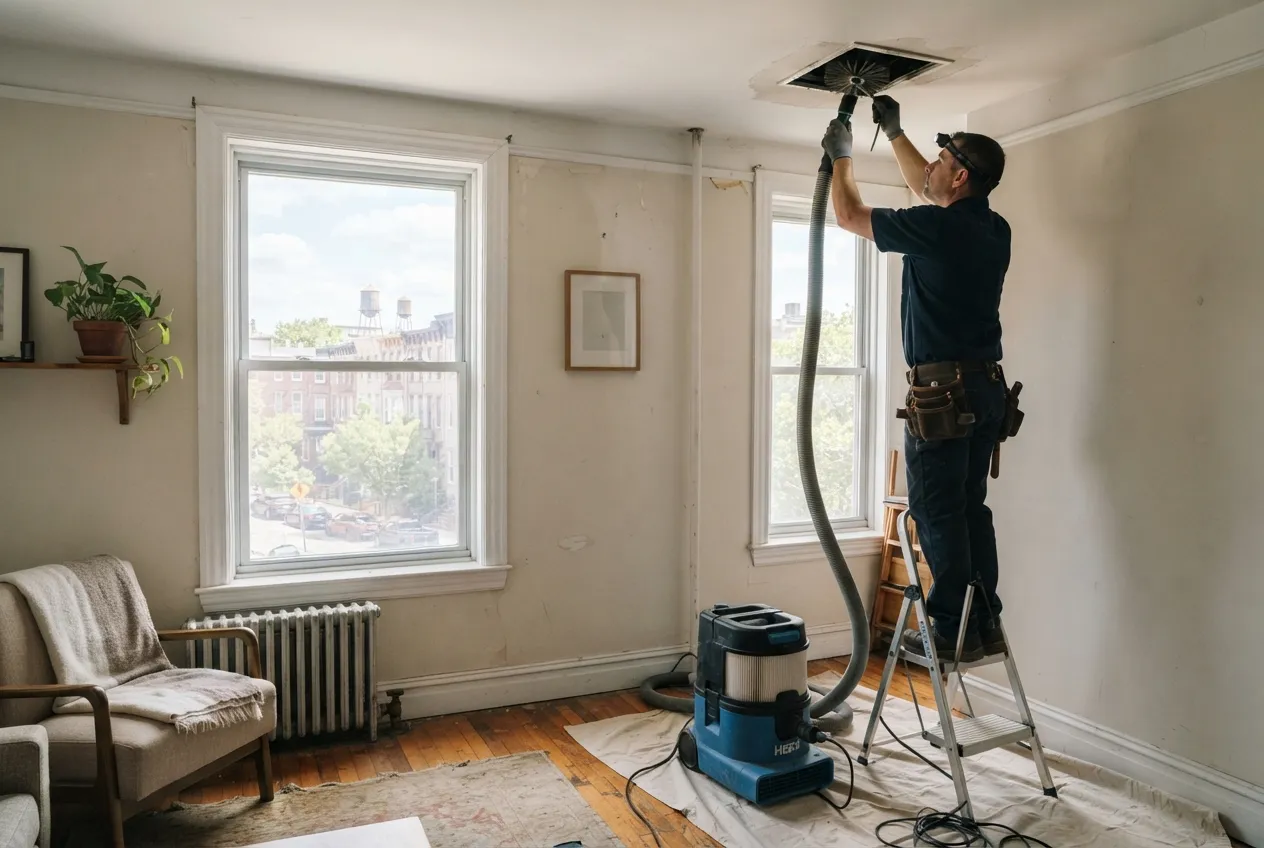
Our technicians connect a powerful vacuum to the system to put it under negative pressure, so loosened dust is pulled out instead of blowing into your rooms. Brushes, air whips and compressed air break debris free from the duct walls while the vacuum collects it. Any equipment used indoors should be HEPA-filtered so fine dust isn't exhausted back into the house.
Chemical treatments such as sanitizers or sealants are not part of a standard cleaning, and the EPA urges caution with them. If one is recommended, you should be told what the product is and why it's needed, and you should be able to say no. A good crew also shows you before-and-after photos and points out problems like leaky joints or crushed flex duct, which may call for duct repair and sealing rather than more cleaning.
Questions to ask before you book
The EPA warns consumers to research the process before responding to very cheap advertised offers. A low teaser offer often turns into a long list of add-ons once the crew is inside. These questions help sort out who does the job properly.
- Will you clean the entire system, including returns, the blower and the air handler, or only the supply vents?
- What equipment do you use, and is it HEPA-filtered or vented outside?
- How do you create negative pressure, and how do you protect my floors and furniture?
- Will you show me photos of the ducts before and after?
- Do you plan to use any chemicals, and can I see the product information first?
- What happens if you find mold, pests or damaged ductwork?
Why health promises are a red flag
According to the EPA, duct cleaning has not been shown to prevent health problems. A company that promises easier breathing, fewer allergy symptoms or protection from illness is claiming something the evidence doesn't back up.
That doesn't make cleaning pointless. Removing mold growth, pest debris or construction dust from your ductwork is a reasonable thing to want. It just should be described honestly: you're removing material from the system, not buying a medical outcome. If a sales pitch leans on fear, treat it as a reason to get a second opinion.
Some related upkeep does matter for safety. The U.S. Fire Administration says failure to clean is the leading factor contributing to home clothes dryer fires, so dryer vent cleaning is worth keeping on your list even if your ducts are fine.
How often should air ducts be cleaned?
There's no fixed schedule that applies to every home. Clean them when there's a clear reason, such as visible mold, pests, or heavy dust and debris. Otherwise, regular filter changes and an occasional look at the system are usually enough.
Will duct cleaning help my allergies?
We can't promise that, and no company should. The EPA says duct cleaning has not been shown to prevent health problems. Cleaning removes dust, debris and contamination from the system, and that's how we describe it.
Should I clean the ducts after buying a home?
It's worth having them inspected, since you don't know how the previous owners maintained the system. If the inspection finds debris, pest signs or construction dust, cleaning makes sense. If the ducts look clean, you can skip it.
My vents smell musty. Is cleaning the answer?
A musty smell usually points to moisture, such as a wet drain pan, condensation on ducts, or a leak. The source has to be found and fixed first. Cleaning and odor removal can follow once the cause is handled.
Do I need duct sanitizing or a chemical treatment?
Not as a routine add-on. The EPA advises caution with chemical treatments in ducts. We only suggest sanitizing or odor removal for a specific problem, explain the product first, and leave the choice to you.
Can you look at my dryer vent or chimney during the same visit?
Yes. We also offer dryer vent cleaning, chimney sweeping and chimney inspection. The NFPA 211 standard calls for chimneys, fireplaces and vents to be inspected once a year, so it's a sensible time to check them.
Find Out What Your Ducts, Vents and Chimney Need
Tell us what you are noticing at home. We will inspect the system, show you photos of what we find, and give you a written price before any work begins.