The short answer
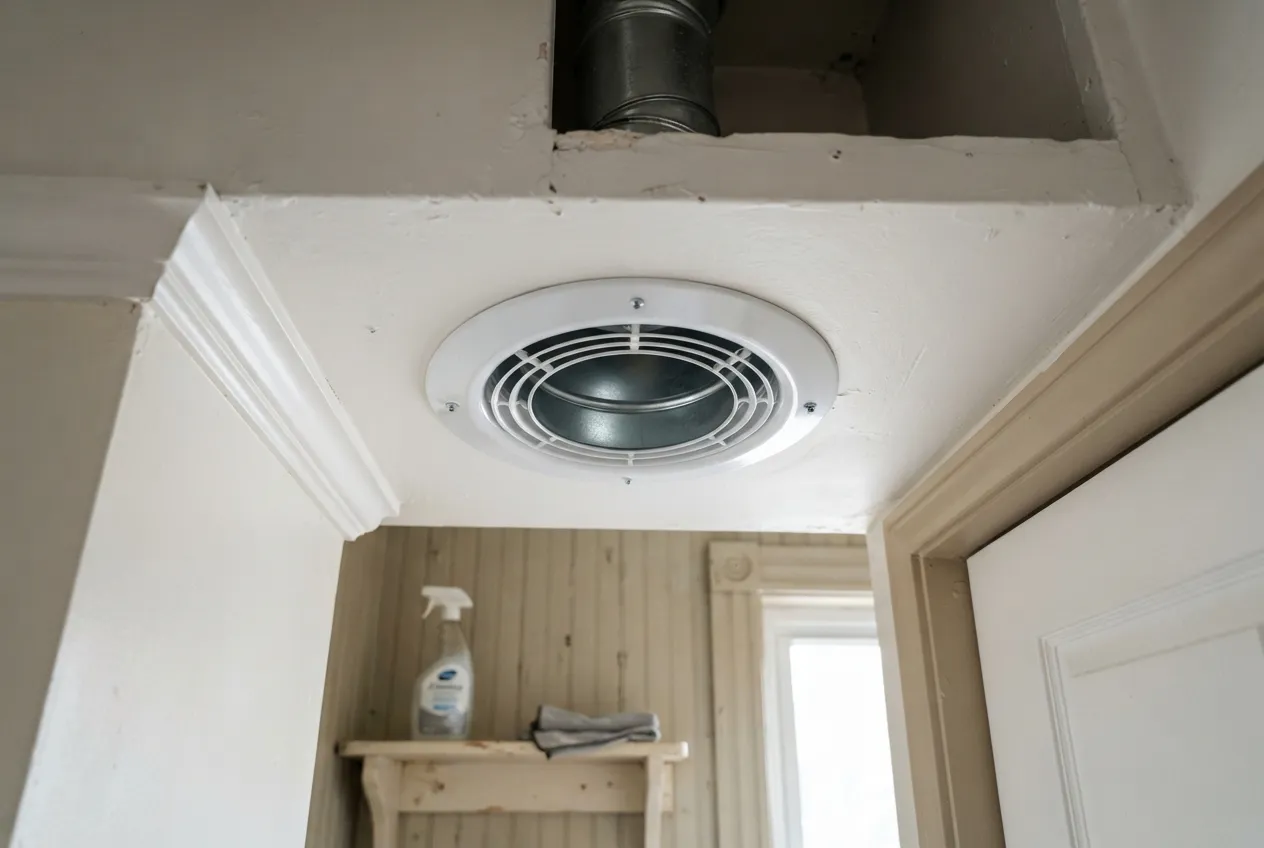
Exhaust fan cleaning removes the lint, dust and grease that build up on bathroom and kitchen fans and in their ducts, so the fan can move air out of your home properly again. We clean the grille, the fan, the reachable duct and the exterior cap, and we use a HEPA vacuum under negative pressure to keep dust out of your living space.
Bathroom and kitchen exhaust fans pull steam, cooking grease and odors out of your home. Over time they also collect lint, dust and grease on the grille, the fan wheel and the duct behind it. As that buildup grows, the fan moves less air, gets louder and leaves moisture and smells behind. MetroFlow cleans bathroom fans, kitchen range hood fans and their ducts in houses, brownstones, co-ops and apartments across Brooklyn and nearby neighborhoods. Below is what we look for, what the work includes, and how a visit goes.
Signs you need it
Most owners call us after noticing one or more of the signs below. Not every sign means the duct needs work. Sometimes the grille and fan are the whole problem, and if that is the case we will tell you.
- Gray fuzz or dust packed on the bathroom fan grille, or dust drifting down when the fan starts
- Mirrors and walls that stay fogged long after a shower, or peeling paint and mildew spots on the bathroom ceiling
- Weak airflow, for example a tissue held up to the grille barely moves
- Cooking smoke and smells that linger even with the range hood running
- A sticky film of grease on the hood, its filters or the cabinets around it
- A musty smell from the fan, or a burnt or hot smell when it runs
- Rattling, humming or grinding from the fan housing
- Renovation dust that got into the fan after drywall, tile or floor work
- Debris, nesting material or signs of pests in the duct or at the exterior cap
What's included
A standard exhaust fan cleaning covers each fan we agree on with you before we start. Here is the checklist we work through.
- Remove and wash the grille or cover
- Clean the fan housing, the blower wheel or blades, and the outside of the motor, by hand and with a HEPA vacuum
- Degrease range hood filters, the hood interior and the hood fan
- Clean the duct run from the fan toward the exterior, as far as access allows
- Check that the backdraft damper opens and closes freely
- Check the exterior cap or roof termination where it can be reached safely, and clear lint, nests or debris
- Look for disconnected, crushed or kinked flex duct, and for ducts that end in an attic or wall cavity instead of outside
- Run the fan afterward and note any noise or weak airflow that remains
- Show you before-and-after photos and explain anything we found that needs repair
How our crew works inside your home or apartment
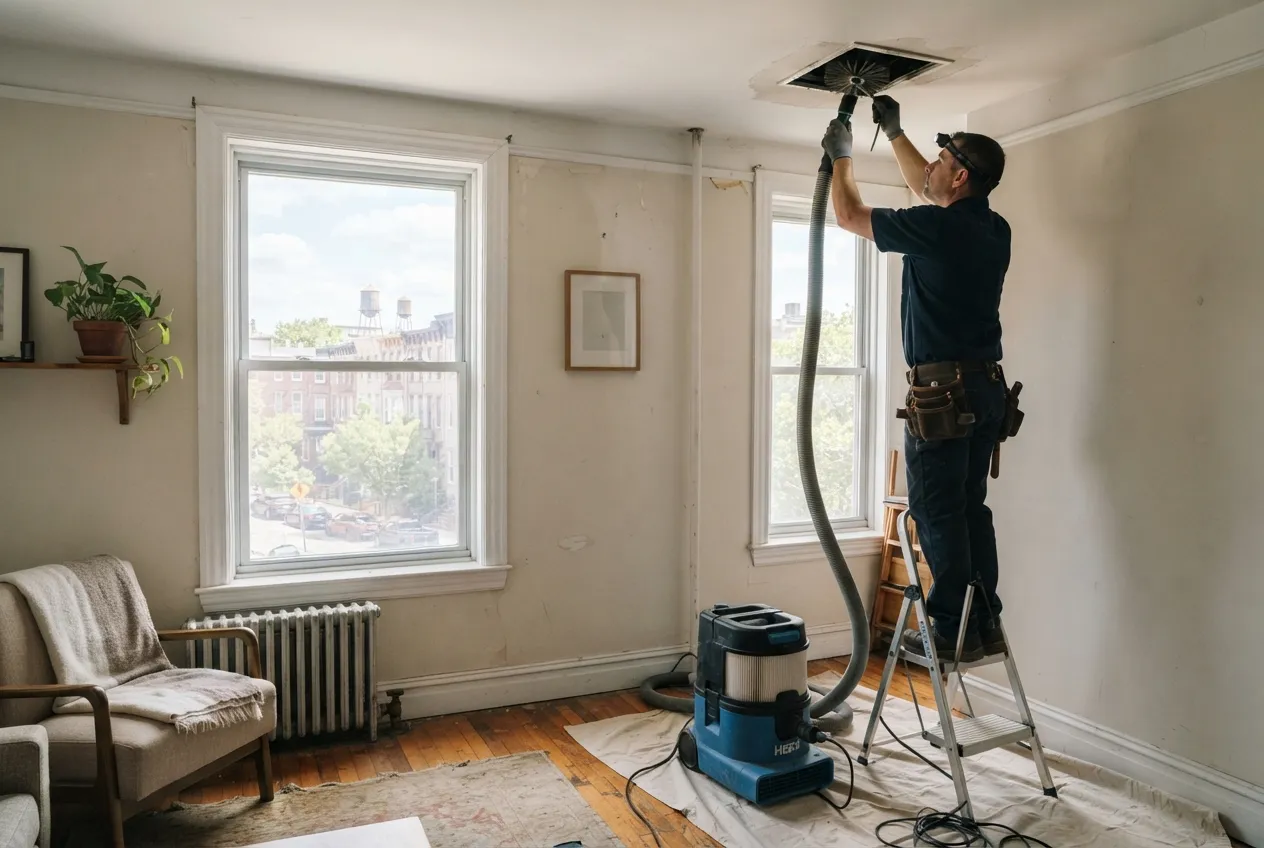
Our certified technicians treat every job as indoor work in a lived-in home. Before anything is opened, we lay drop cloths from the entry to the work area. We also cover the tub, vanity, stove and counters near the fan. In a kitchen, we move what needs moving and put it back when we finish.
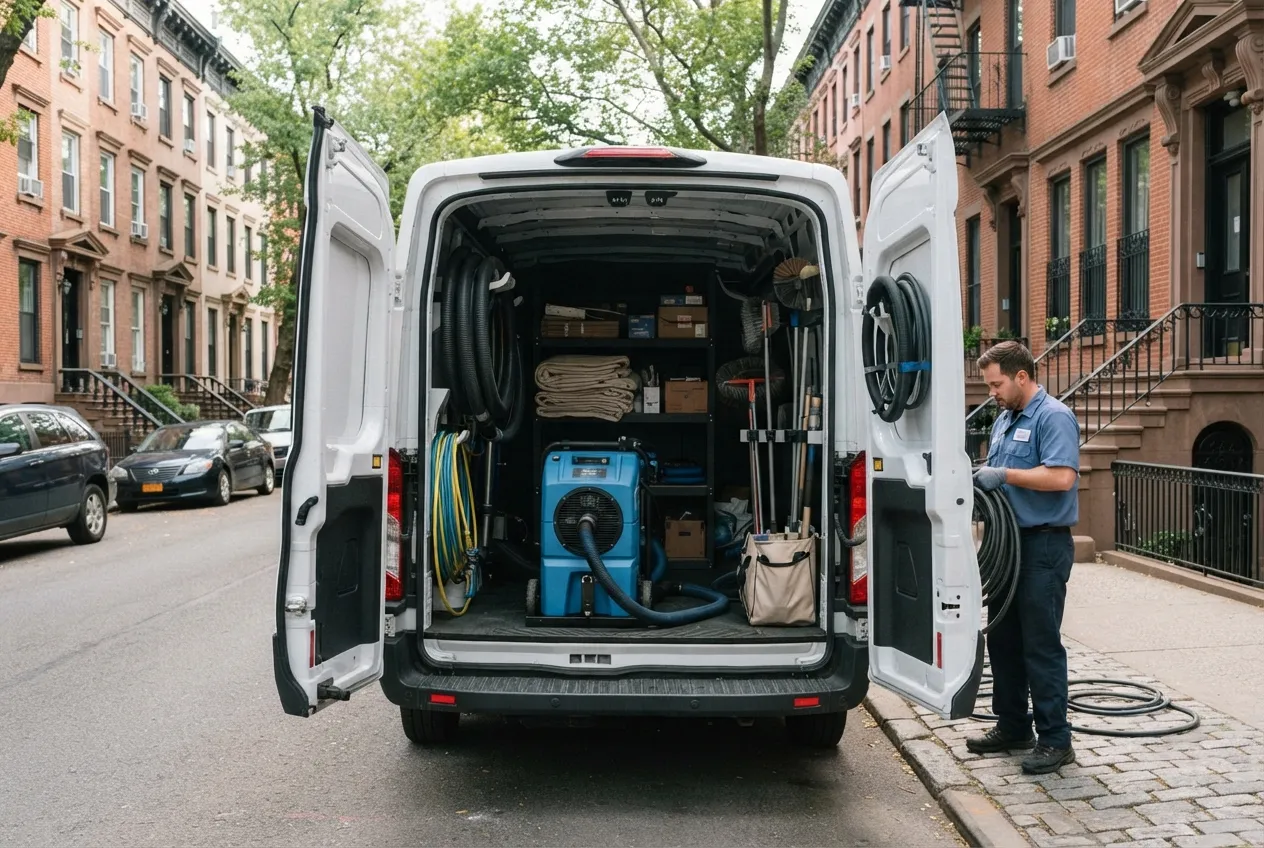
Before we clean the duct, we seal nearby registers and openings so loosened dust has nowhere to go but into our equipment. A HEPA vacuum connected to the duct keeps it under negative pressure, which means air pulls inward. While the vacuum runs, rotary brushes and air whips break up lint, dust and grease along the duct walls. Kitchen ducts with heavy grease may also need scraping and degreasing in the sections we can reach.
When a duct is long, bends out of sight or follows an unclear route, we run a camera to see its condition and where it actually ends. This matters in Brooklyn row houses and older apartment buildings, where a bathroom fan sometimes connects to a shared vertical shaft or a roof fan that serves several units. In those cases we clean your fan and the section that belongs to your unit. If the shared part needs attention, we let you know so you can raise it with building management.
Ready for cleaner ducts?
Mold, pests and sanitizing
The U.S. EPA advises cleaning air ducts when there is substantial visible mold growth, vermin, or excessive dust and debris. The EPA also says duct cleaning has not been shown to prevent health problems, so we do not promise that cleaning a fan will improve anyone's health. What cleaning does is clear the buildup, so the fan can move moisture, odors and grease out of your home the way it was designed to.
We do not fog or spray chemicals as a routine add-on. Sometimes there is a specific reason to sanitize, such as a lasting odor, signs of pests or visible growth. In that case we explain the option first and use only products registered for that use. If moisture keeps causing growth, the real fix is usually the fan itself or the duct route, and we will point that out. The EPA also recommends researching the process before responding to very cheap advertised offers. We are glad to walk you through exactly what we will do before you book.
What affects the price
We quote after we know what the job involves. These are the main factors.
- How many fans need cleaning, such as bathroom fans, a range hood, or laundry and utility room fans
- Duct length, the number of bends, and how we reach the duct: through the ceiling, an attic, a crawlspace or the roof
- Condition, from light dust to heavy grease, nesting material or water damage
- Building type: a detached house, a brownstone or row house, or an apartment or co-op with building rules, elevator reservations or a shared exhaust system
- Any repairs found during cleaning, such as a sticking damper, a damaged exterior cap or a duct that needs reconnecting. We quote these separately and do them only if you approve.
How a visit works
First, tell us which fans you want cleaned, what you have noticed and what type of building you live in. If you are in a co-op, condo or rental building, check whether management has rules about contractor access or work hours so the visit goes smoothly.
On the day of the visit, the technicians look at each fan and duct and confirm the scope with you. Then they protect the work area and start cleaning. Before leaving, we run each fan, clean up and remove the drop cloths. We also go over photos and notes with you. If something needs repair or a closer look, we explain it and leave the decision to you.