The short answer
Air duct repair and sealing fixes leaks, crushed sections and loose joints so heated and cooled air reaches your rooms instead of walls and crawl spaces. MetroFlow's certified technicians inspect, repair and seal Brooklyn duct systems using contained, HEPA-vacuum work, and they explain the scope and price before any work starts.
Leaky, crushed or disconnected ductwork sends heated and cooled air into wall cavities, basements and ceiling spaces instead of the rooms that need it. It can also pull dust from those spaces back into the system. MetroFlow repairs and seals residential duct systems in Brooklyn brownstones, row houses, condos and apartments, and in nearby neighborhoods. Our certified technicians find the leaks and damage, fix what can be fixed, replace what can't, and seal joints with materials made for ductwork. The goal is simple: the air your system moves should reach the rooms it was designed to serve.
Signs you need it
Duct problems rarely announce themselves. Most owners notice a pattern over a few weeks, after a renovation or move-in, or during a stretch of heavy heating or cooling. These are the signs we hear about most often:
Some of these signs, like a burnt smell, can also come from the heating equipment itself. If we find the cause is outside the ductwork, we will tell you so you can have the equipment looked at.
- Dust puffing out of supply registers when the system starts, or settling on furniture soon after you clean
- Renovation dust that keeps showing up weeks after the work ended, often because a duct was cut, knocked loose or left open
- Debris, insulation or droppings in the ducts, or sounds of pests in a duct run
- A musty smell when the system runs, or a burnt or dusty odor at the start of the heating season
- Weak airflow in one or two rooms while others feel fine
- Rooms that never reach the thermostat setting, or a system that seems to run longer than it used to
- Visible gaps, sagging flex duct or loose tape at joints in a basement, closet or ceiling space
What's included
Every repair and sealing visit covers the same core steps. How much repair work is needed depends on what we find.
- A walk-through with you to note problem rooms, smells and any recent work
- A visual inspection of accessible duct runs, plenums, boots and register connections
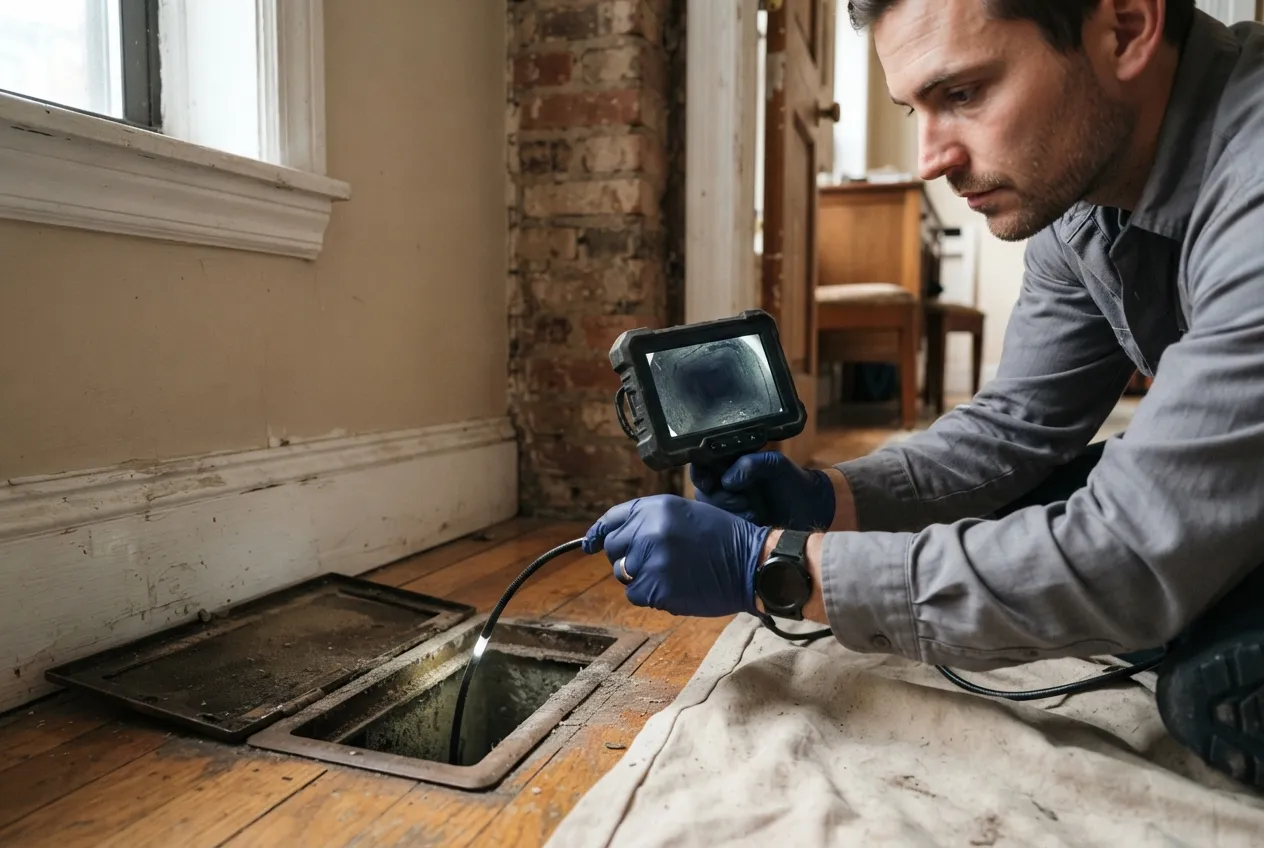
- A camera inspection of runs we can't see directly, where the layout allows it
- Reconnecting and fastening loose or separated joints and takeoffs
- Repairing or replacing crushed, torn or kinked sections of flex and rigid duct
- Sealing joints and seams with duct mastic or tape rated for duct use, not cloth duct tape
- Sealing gaps where boots and registers meet walls, floors and ceilings
- Securing sagging runs with proper hangers or straps
- Removing debris from the sections we open or repair
- An airflow check at the registers before and after the work
- A plain-language rundown of what we fixed and anything we recommend addressing later
How the crew works in your home
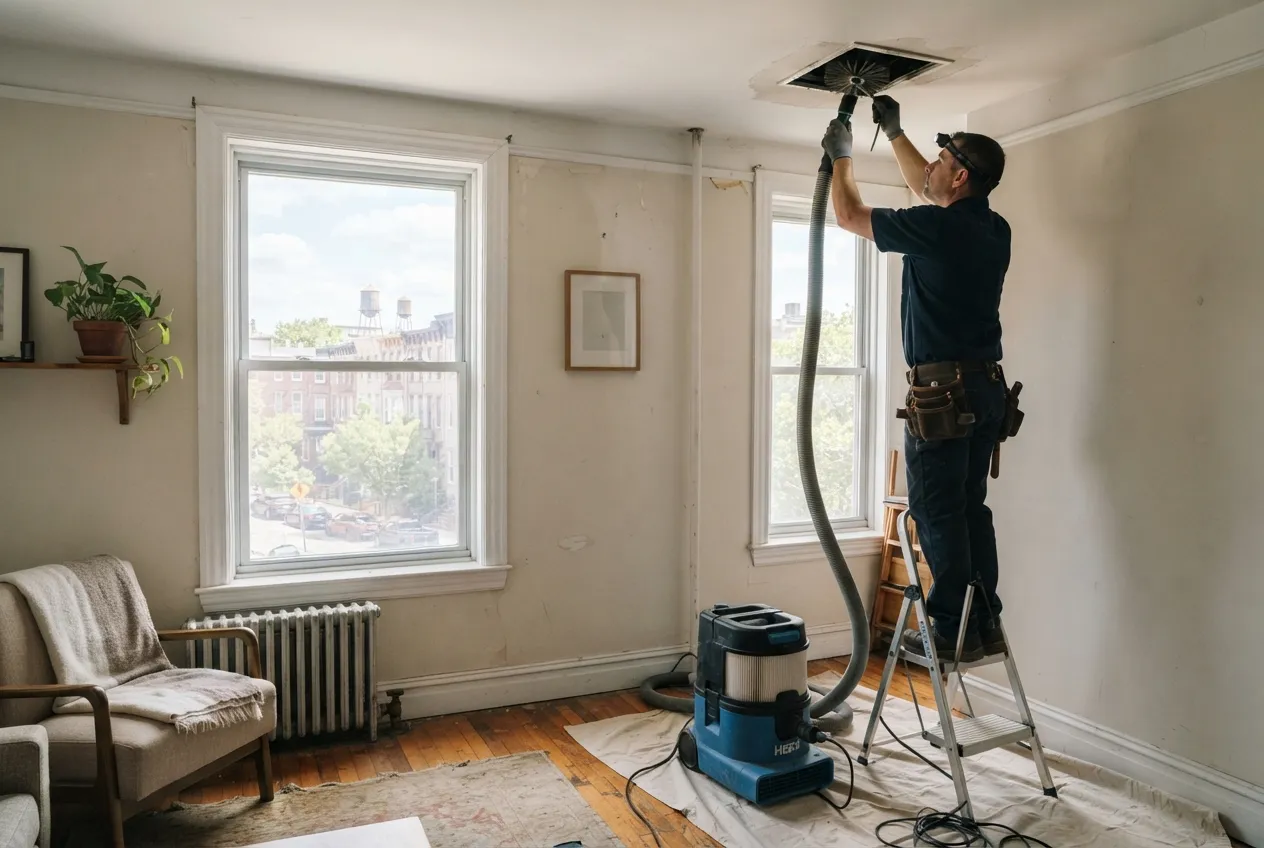
People are living in the home while we work, so the crew sets up to keep dust and debris contained. We lay drop cloths along the path from the door to the work area and around every register we touch. Registers we aren't working on are covered and sealed so loosened debris can't blow into the room.
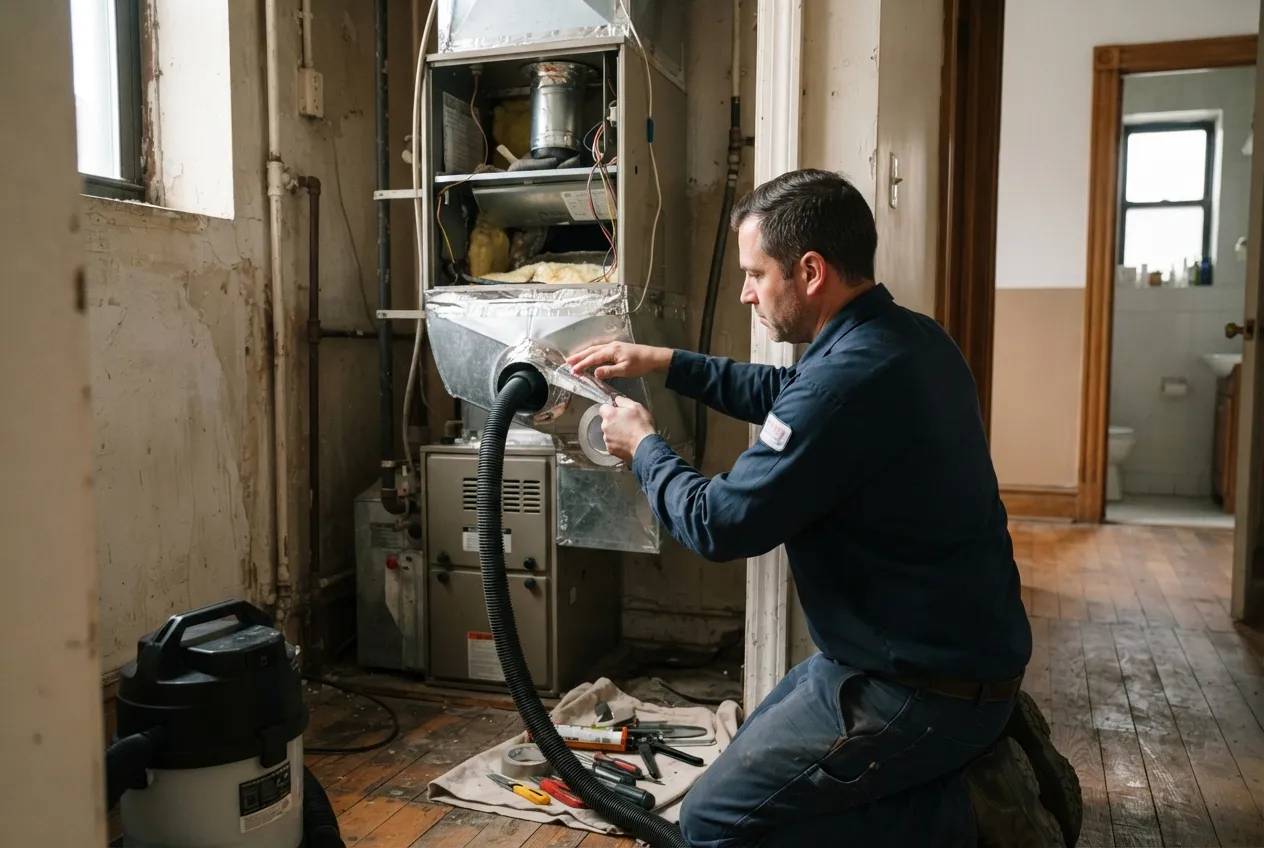
Before we open or clean any section, we connect a HEPA-filtered vacuum to the duct system and put it under negative pressure. That pulls loosened dust toward the vacuum and away from your living space. Rotary brushes and air whips knock debris off the duct walls in the sections we're repairing, and a camera lets us check hard-to-reach runs before and after the work.
In apartments and co-ops, we follow building rules on work hours, elevator use and access to shared spaces. We keep the work inside your unit unless management has approved more.
We follow the EPA's practical guidance on ducts. The EPA advises cleaning when there is substantial visible mold growth, vermin, or excessive dust and debris, and it says duct cleaning has not been shown to prevent health problems, so we don't make health claims about our work. If there's a reason to sanitize, such as a lingering odor, signs of pests or visible growth, we use only products registered for that use, and we talk it over with you first. The EPA also urges caution with chemical treatments and with very cheap advertised offers, so ask us exactly what a visit will include.
Ready for cleaner ducts?
What affects the price
We don't quote a flat rate sight unseen, because duct systems vary a lot from home to home. These are the main factors:
We explain the scope and price before any work starts, and we check with you before doing anything beyond what we agreed on.
- The number of supply and return vents in the system
- Total duct length and how easy the runs are to reach, such as an open basement compared with runs above finished ceilings or inside walls
- The condition of the ductwork, including how many sections need repair or replacement rather than sealing
- Building type: a single-family house, a multi-family brownstone, a co-op or a condo, along with any access or scheduling rules
- Whether debris, signs of pests or odor call for extra cleaning or sanitizing
How a visit works
Most visits follow the same order:
Many smaller systems can be finished in one visit. Larger repairs, or sections behind finished walls and ceilings, may need a second visit, and we'll tell you that up front.
- You contact us and describe the home, the problems you've noticed and any recent work. For apartments, we ask about building access rules.
- The crew arrives, walks the system with you and protects floors and furnishings.
- We inspect the ductwork by eye, and by camera where it fits, and show you what we find.
- We confirm the scope and price with you before repairs begin.
- We repair, reconnect and seal, then check airflow at the registers.
- We clean up, remove debris and drop cloths, and walk you through the finished work.