The short answer
Yes, MetroFlow serves Peter Cooper Village, about a mile from our Greenpoint, Brooklyn office. We clean air ducts, dryer vents, exhaust fans, HVAC systems, and chimneys, and we inspect chimneys, for apartment residents, building owners, and commercial spaces.
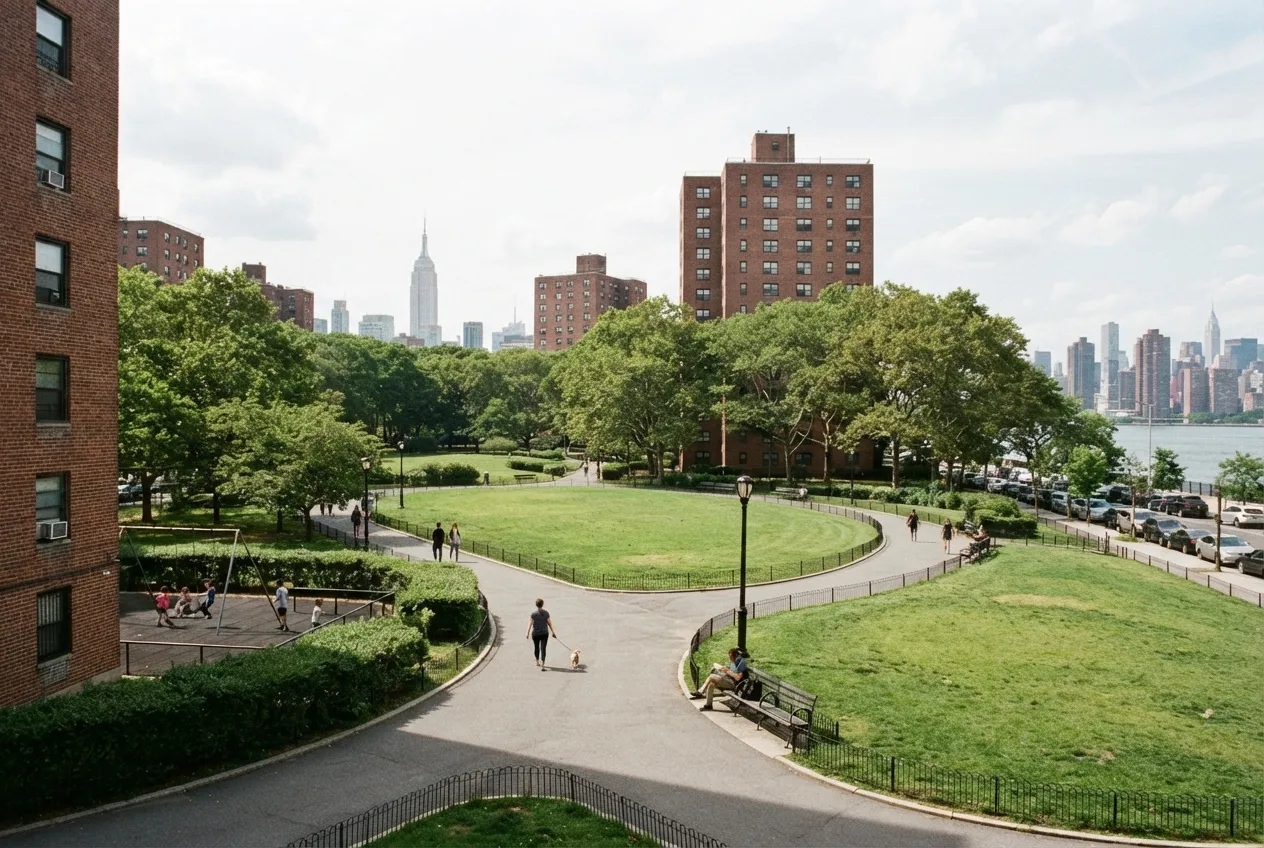
Peter Cooper Village is a Manhattan neighborhood made up largely of mid-rise apartment buildings, and it sits about a mile west of our office in Greenpoint, Brooklyn, just across the East River. That short distance makes it practical for our certified technicians to schedule visits for apartment residents, building managers, and commercial tenants. This page covers what we clean, what matters most in this kind of housing, and how New York's long heating season and humid summers affect your ducts, vents, and flues.
Services Available in Peter Cooper Village
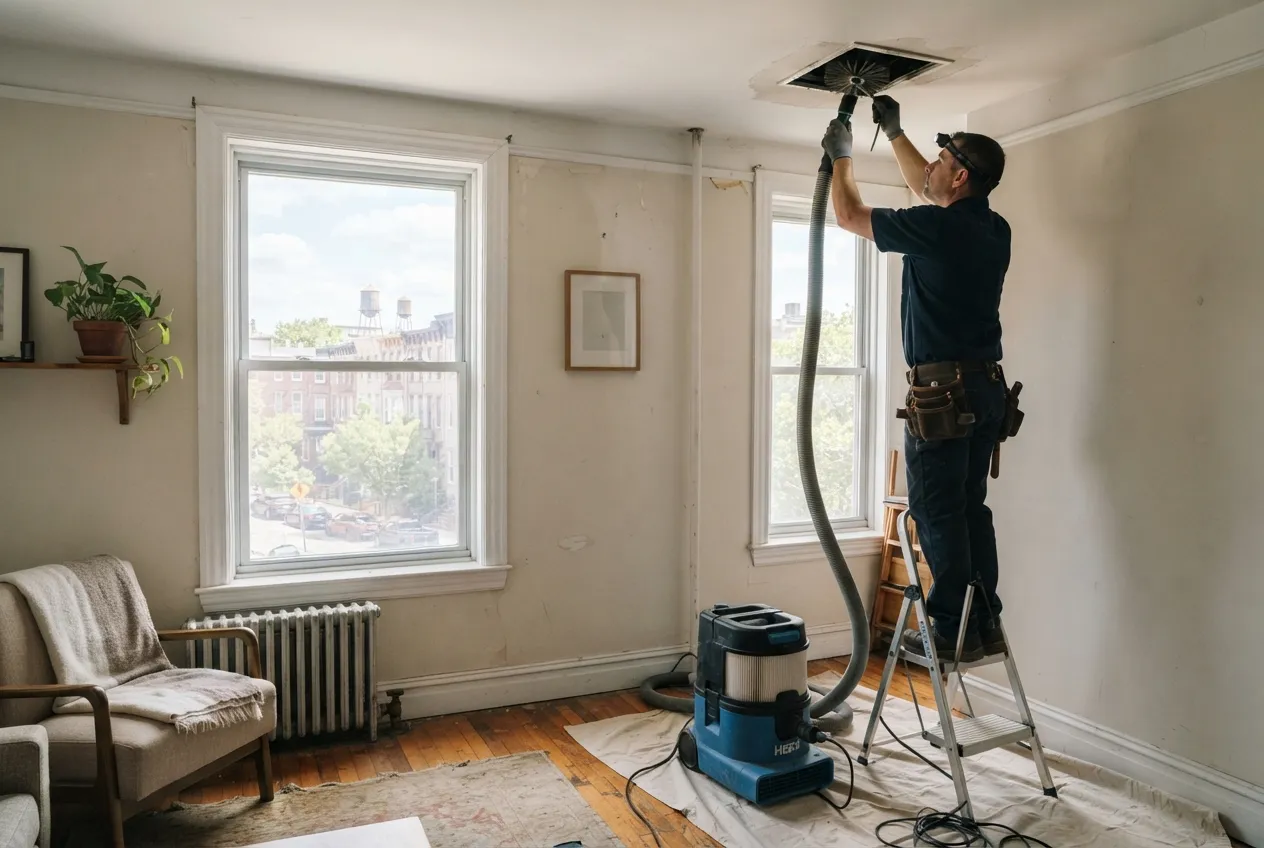
Most calls from this neighborhood come from apartment residents and the people who manage their buildings. We can handle a single unit or coordinate work across shared systems. These are the services we offer here:
- Air Duct Cleaning for supply and return ducts
- Dryer Vent Cleaning to clear lint from the full vent run
- HVAC System Cleaning, including blower, coils, and drain pan access
- Duct Sanitizing & Odor Removal when there is a specific reason for it
- Chimney Sweep for fireplaces and appliance flues
- Dryer Vent Repair & Rerouting for crushed, disconnected, or overly long runs
- Air Duct Repair & Sealing to fix leaks at joints and connections
- Exhaust Fan Cleaning for kitchen and bathroom fans
- Chimney Inspection following the NFPA 211 inspection levels
- Commercial Duct Cleaning for offices and ground-floor businesses
What Apartment Living Means for Your Ducts and Vents
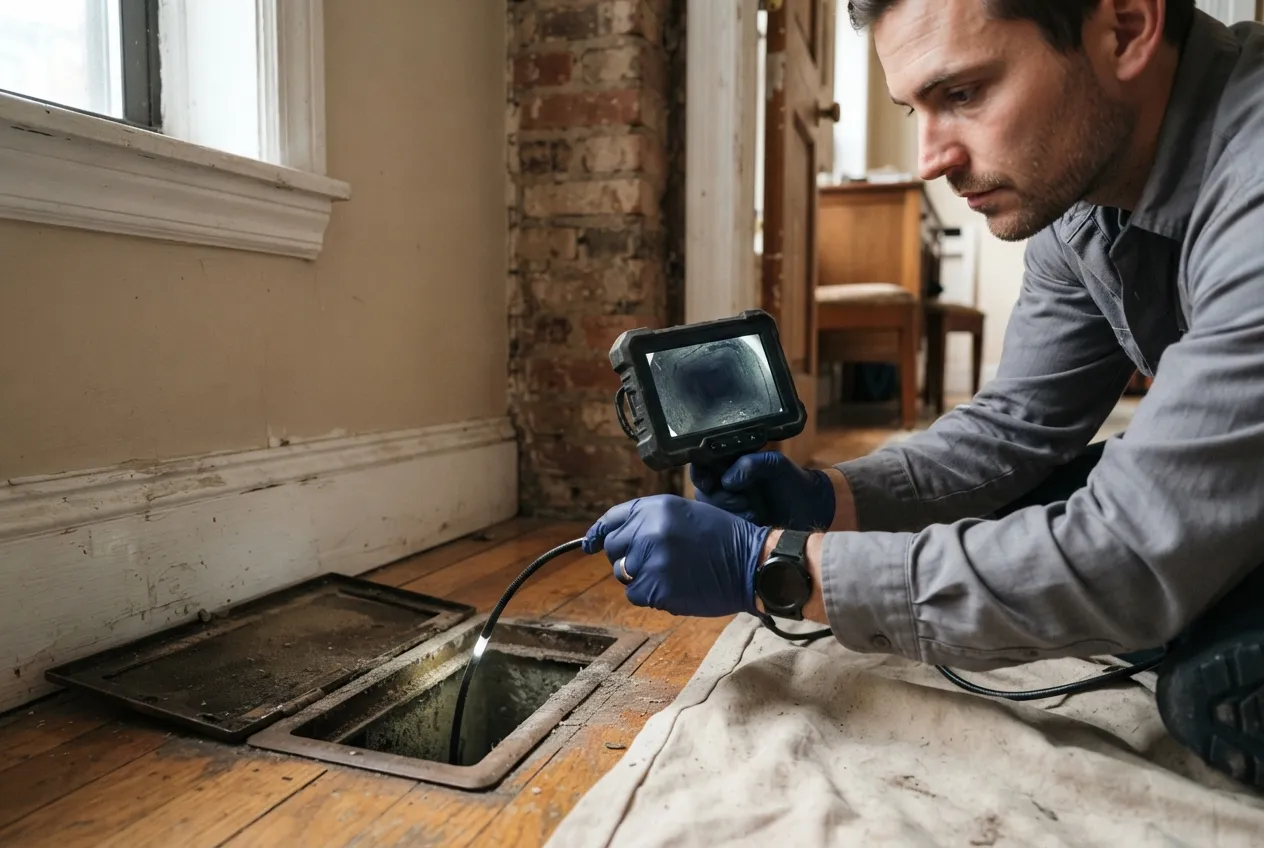
In a mid-rise apartment building, not everything that moves air through your unit belongs only to you. Kitchen and bathroom exhaust may connect to shared risers, and heating or cooling equipment may be controlled by the building. Before we start, we confirm which parts are inside your unit and which need sign-off from building management, so nothing gets opened or adjusted without the right approval.
Inside the unit, the usual trouble spots are bathroom exhaust fans clogged with dust, kitchen fans coated in grease, and return grilles that pull in lint and pet hair. Where an in-unit dryer is allowed, the vent often runs farther than people expect before it reaches the outside, and that length is where lint builds up.
How New York's Seasons Affect Indoor Air
New York City's heat season runs from October 1 through May 31. During those months, building owners must keep apartments heated to the city's minimum temperatures, so heating systems run for most of the year. Long stretches of steady heat move a lot of air and dust, and with windows closed, indoor air recirculates more.
Summers bring the opposite problem: humidity. Air conditioners and the coils inside HVAC equipment collect moisture, and damp surfaces combined with dust can lead to growth you can see. Late spring and early fall, between heating and cooling, are convenient times to have systems looked at.
We follow the U.S. EPA's guidance on when duct cleaning makes sense: when there is substantial visible mold growth, signs of vermin, or excessive dust and debris. The EPA also notes that duct cleaning has not been shown to prevent health problems, so we won't tell you otherwise. It also advises caution with chemical treatments, and we only use sanitizing products when there is a clear reason and you agree to it first.
Ready for cleaner ducts?
Dryer Vents and Fire Safety
According to the U.S. Fire Administration, failure to clean is the leading factor in home clothes dryer fires. Signs that your vent needs attention include clothes taking longer to dry, a dryer that feels very hot on the outside, or a burning smell during a cycle. We clean the full vent run, not just the lint trap area. If the vent is crushed, disconnected, or has too many turns, we can repair or reroute it.
Chimneys, Flues, and Building Conversions
The NFPA 211 standard calls for chimneys, fireplaces, and vents to be inspected once a year. A Level 1 inspection fits when nothing has changed. A Level 2 inspection applies when the system changes, such as a new appliance or a switch in fuel, or when the property is sold. A Level 3 inspection is needed when a hidden hazard can only be reached by opening part of the chimney or building.
For building owners, a boiler conversion from oil to gas in New York City requires the chimney to be evaluated as part of the work. A new liner is often needed, because gas exhaust produces acidic condensate that can corrode a masonry flue. We can inspect the existing flue and explain what we find before any conversion work moves forward.
Nearby Neighborhoods We Also Serve
Because we are so close, we regularly work in the surrounding area too, including Stuyvesant Town, the East Village, Gramercy, Murray Hill, and Kips Bay. The housing across these neighborhoods ranges from large apartment complexes to pre-war buildings and brownstones, and we adjust our approach to fit each building.
Services in Peter Cooper Village
- Air Duct Cleaning in Peter Cooper Village
- Dryer Vent Cleaning in Peter Cooper Village
- HVAC System Cleaning in Peter Cooper Village
- Duct Sanitizing & Odor Removal in Peter Cooper Village
- Chimney Sweep in Peter Cooper Village