
The short answer
HVAC system cleaning in Long Island City covers the blower, coil, drain pan, registers and ductwork together, not just the vents you can see. It makes the most sense when there is visible mold, pests, or heavy dust and debris, and the easiest time to schedule it is before heating or cooling season starts.
Long Island City homes run on a wide mix of heating and cooling equipment, from forced-air furnaces in older rowhouses to compact air handlers tucked into closets of newer apartment buildings. Whatever the setup, dust, lint and debris collect in the same places: the blower, the coil, the drain pan and the ducts that carry air to each room. MetroFlow Air Duct Cleaning Services cleans these parts as one system for homeowners in ZIP codes 11101 and 11109. Our Greenpoint office is about a mile south, so getting a certified technician to your home is a short trip.
What HVAC System Cleaning Includes
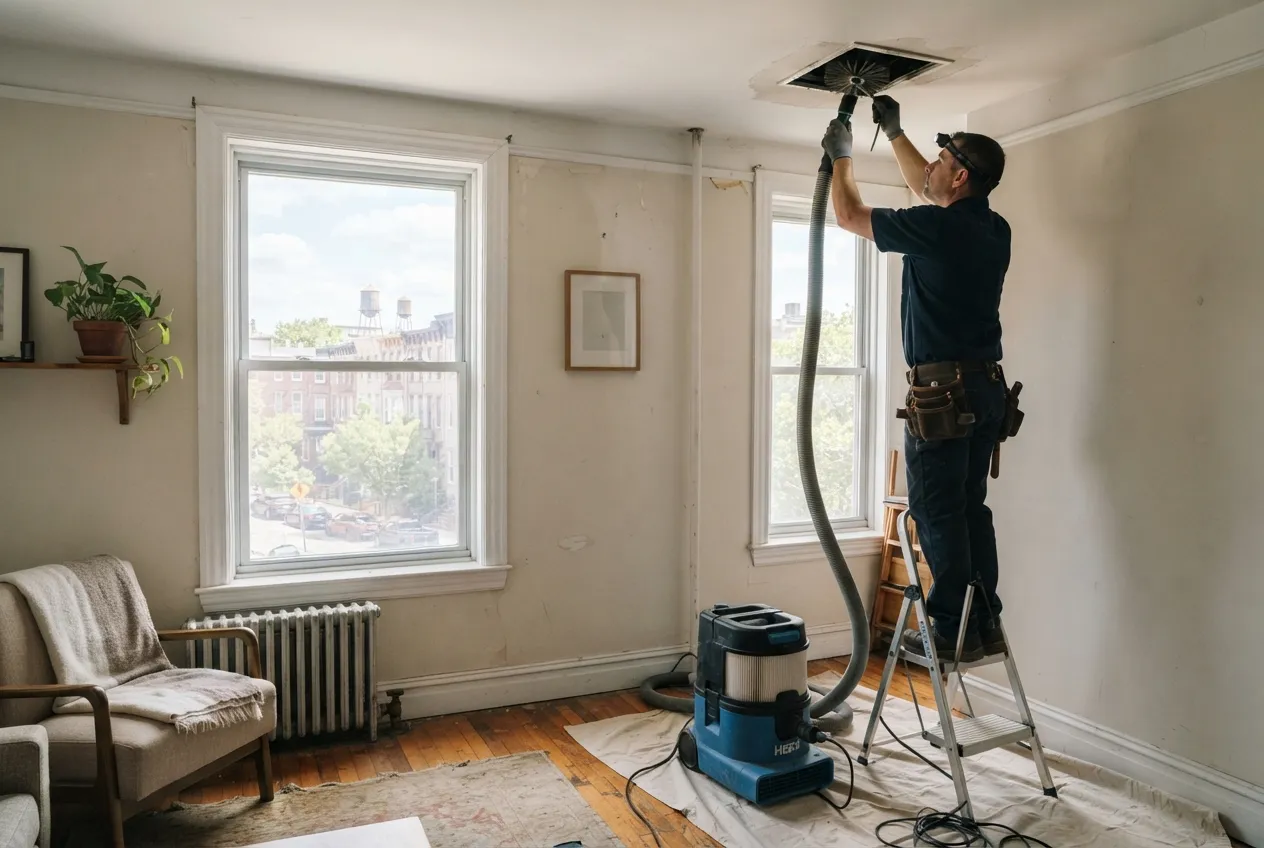
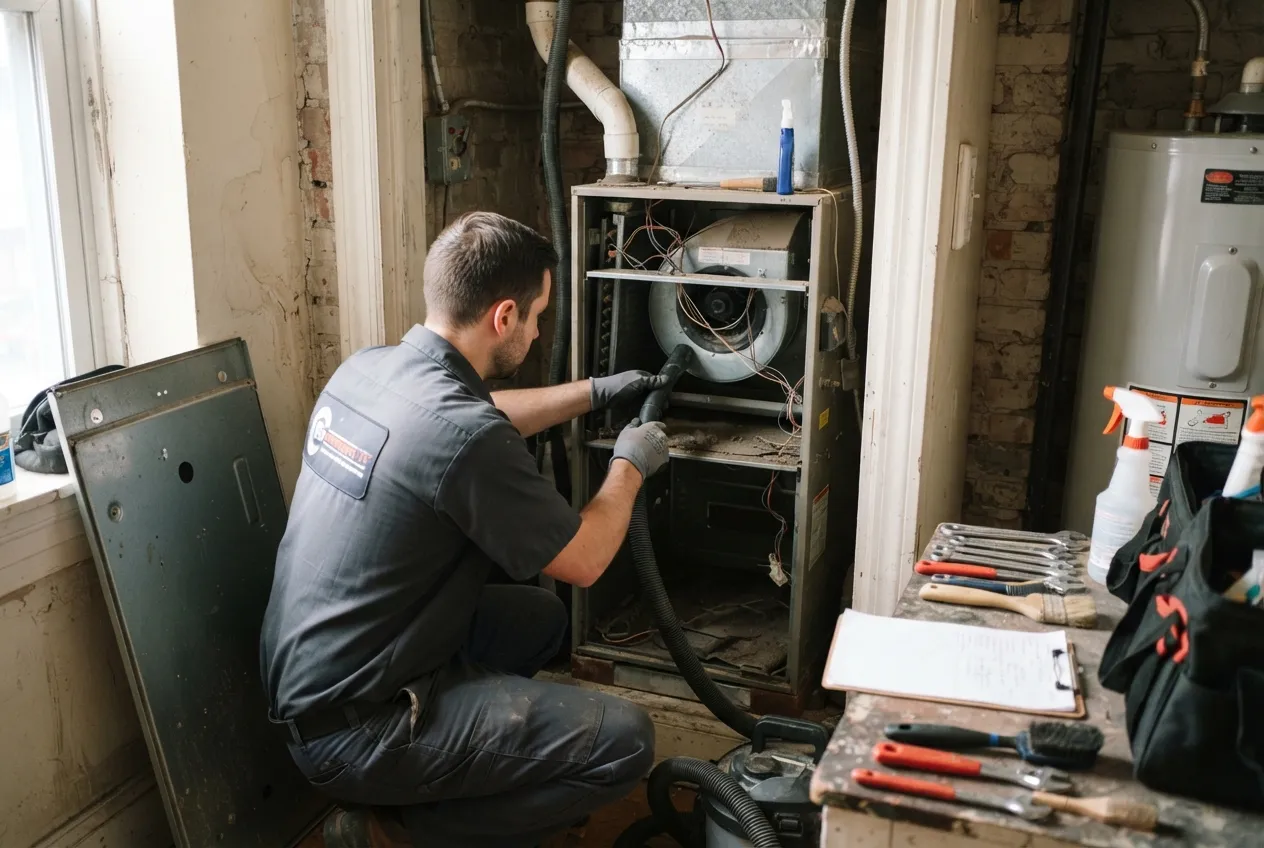
Cleaning only the ducts leaves the dirtiest parts of the system untouched. Air passes through the blower and across the coil before it ever reaches a duct, so those components hold much of the buildup. When we clean an HVAC system, we work through the whole air path.
Before starting, the technician inspects the system so you know what we found and what we plan to clean. If something needs a repair rather than a cleaning, we tell you plainly.
- Supply and return ductwork, cleaned under negative pressure so loosened debris is pulled out rather than blown into the house
- Blower motor housing and fan wheel
- Evaporator coil surfaces and the condensate drain pan
- Registers, grilles and return-air boxes
- A check of the filter slot and filter fit, since gaps let dirty air bypass the filter
How Long Island City Homes Differ
Housing here ranges from rowhouses and pre-war apartment buildings to converted loft spaces and newer mid- and high-rise buildings. Each has its own layout, and it changes how we do the work.
In older rowhouses, a forced-air furnace in the basement often feeds long duct runs that were added or modified over the years. Those runs can have tight bends and sections that are hard to reach, so we map them before we start. In apartments with their own air handler or fan coil unit, the equipment usually sits in a closet or above a ceiling panel. Duct runs are shorter, but the coil and drain pan tend to collect more grime because the unit runs nearly year-round. Loft conversions often have exposed or long horizontal ducts that gather dust along their lengths.
For apartments and condos, we work within your building's rules on access hours, elevator use and floor protection. If your unit's equipment is managed by the building, check with management first about what you are allowed to service.
When Cleaning Is Worth Doing
We follow the same guidance the U.S. Environmental Protection Agency gives homeowners. The EPA advises duct cleaning when there is substantial visible mold growth, signs of vermin such as rodents or insects, or excessive dust and debris coming from the registers. The EPA also notes that duct cleaning has not been shown to prevent health problems, so we don't promise that it will.
Other common reasons Long Island City homeowners call us include moving into a home where the system's history is unknown, finishing a renovation that sent drywall dust into the ducts, or noticing a musty smell when the air conditioning turns on. The EPA also cautions consumers to research the process before responding to very cheap advertised offers and to be careful with chemical treatments. We only use a sanitizer or coating if there is a clear reason, and we explain it before applying anything.
Ready for cleaner ducts?
Timing It Around the Heating Season
New York City's heat season runs from October 1 through May 31. For most homes, the best window is late summer or early fall, before the furnace or heat pump starts running daily. A spring cleaning, once heat season ends, prepares the coil and drain pan for months of air conditioning, when moisture makes buildup worse.
If you live in a building where heat is supplied centrally but cooling comes from your own unit, schedule around the cooling season instead.
What to Expect on the Day
The technician protects floors and furniture near the work area, turns the system off, and sets up the vacuum equipment. Registers come off and are cleaned separately. Afterward, the system is put back together and tested, and you get a walk-through of what was cleaned, including anything we noticed that may need attention later.
Most homes stay livable during the visit. The work can be noisy, so plan for that if you work from home. We also serve nearby Hunters Point, Sunnyside, Greenpoint, Murray Hill and Kips Bay.
More services in Long Island City
- Air Duct Cleaning in Long Island City
- Dryer Vent Cleaning in Long Island City
- Duct Sanitizing & Odor Removal in Long Island City
- Chimney Sweep in Long Island City