The short answer
HVAC system cleaning in Hunters Point covers the ducts plus the blower, coil, drain pan and registers, so settled dust isn't recirculated each time the system runs. It's worth doing when you see substantial mold, signs of pests or heavy dust and debris. Late summer or early fall, before heat season starts October 1, is a good time to schedule it.
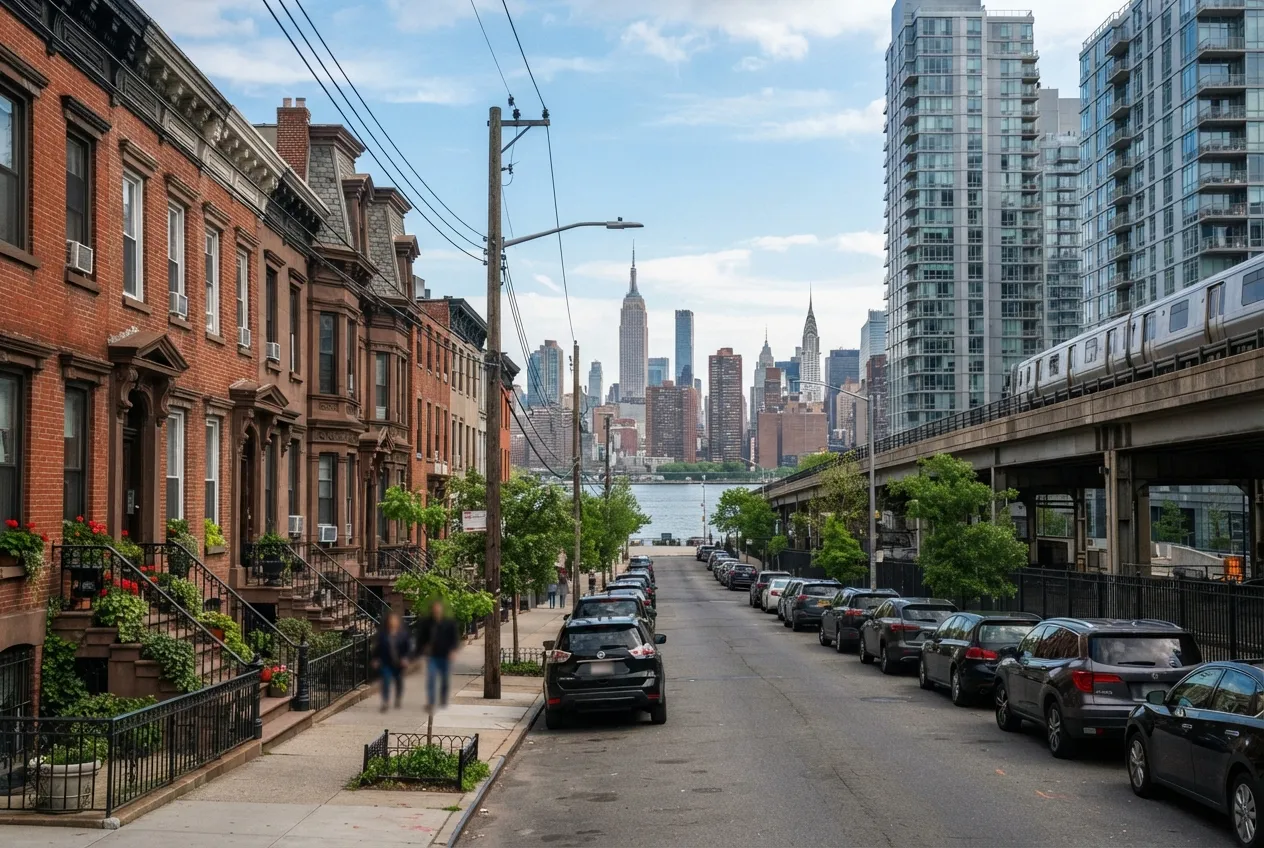
Hunters Point is about a mile north of our office in Greenpoint, Brooklyn, so homes in the 11101 and 11109 ZIP codes are a short trip for our certified technicians. HVAC system cleaning covers more than the vents you can see. We clean the supply and return ducts and the parts of the air handler that move and condition the air. That way, dust settled inside the system isn't pushed back into your rooms every time the heat or air conditioning runs. This page explains what the work involves for Hunters Point homes and how to decide whether your system needs it.
What HVAC system cleaning includes
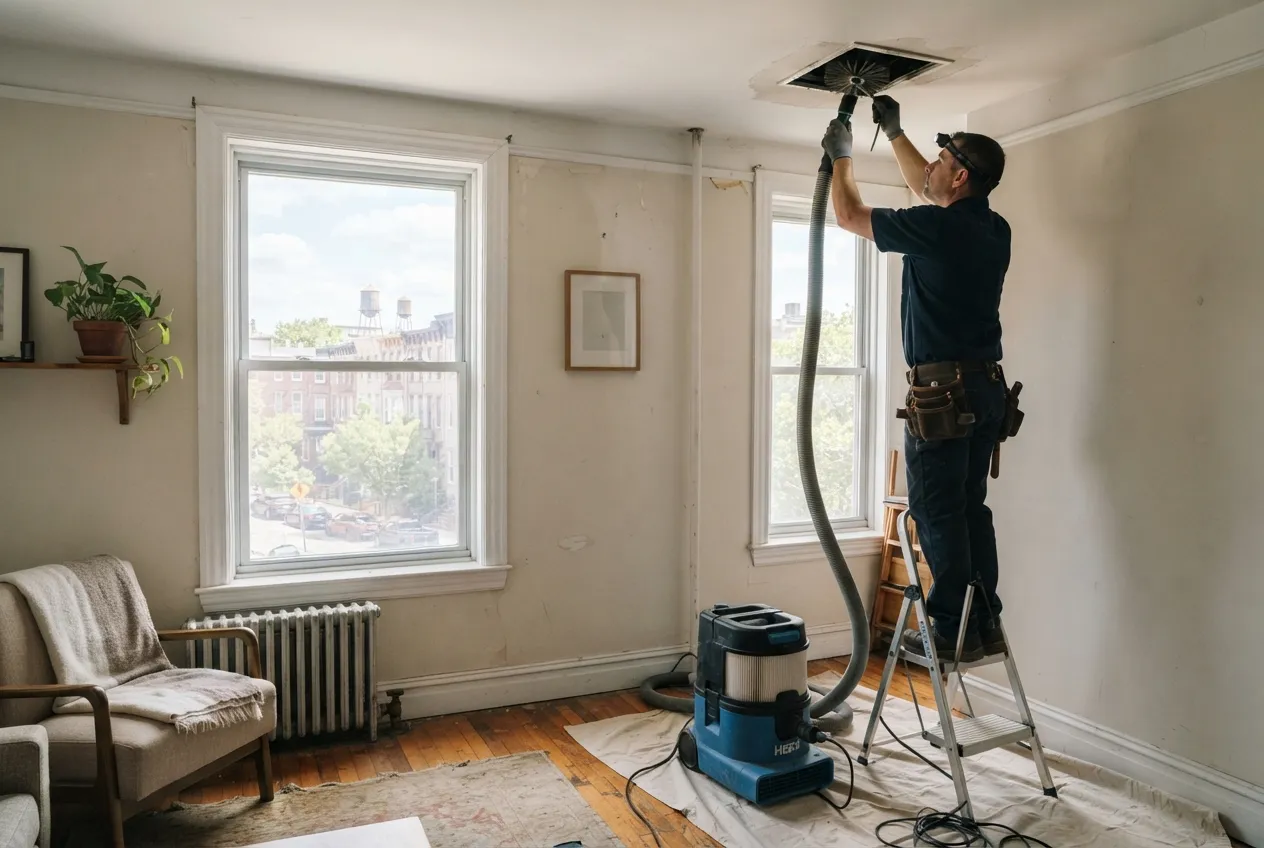
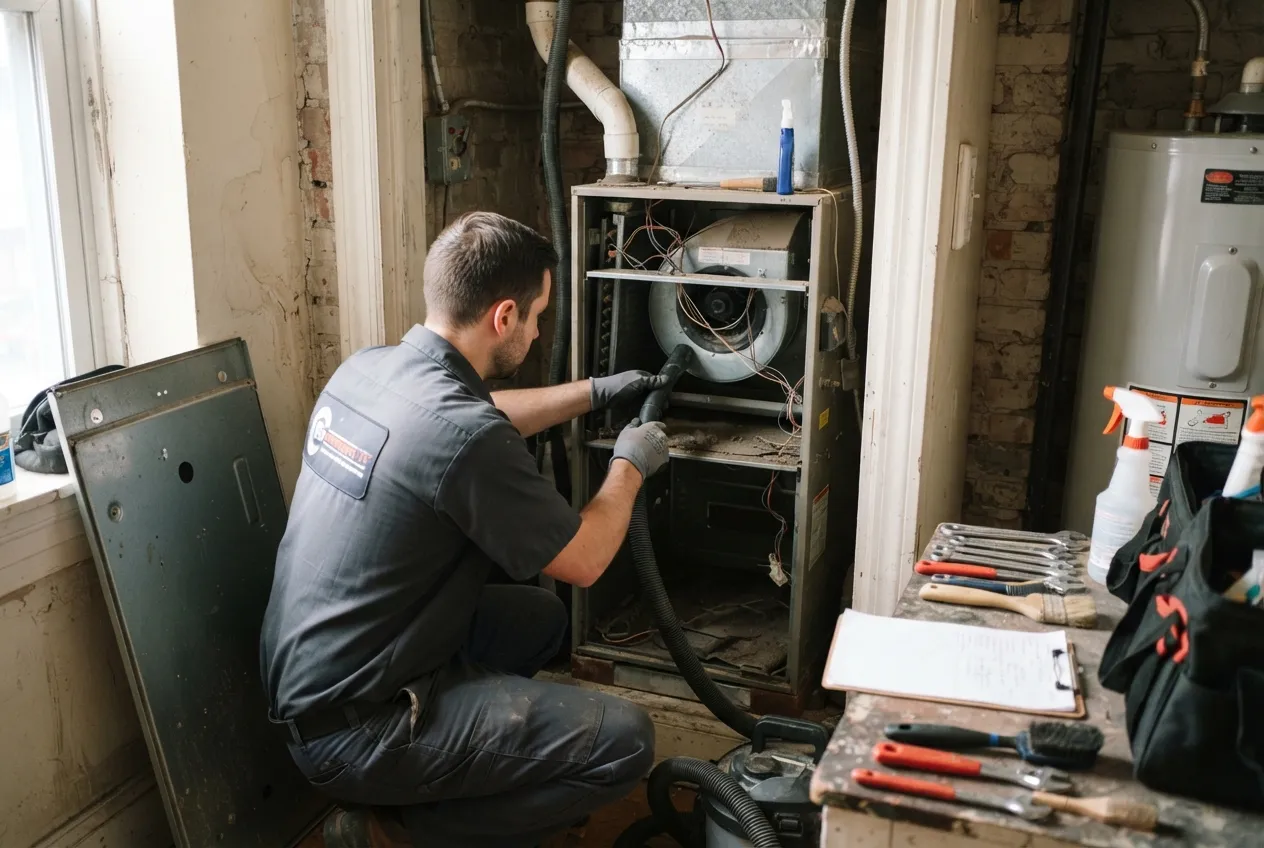
Duct cleaning on its own only addresses the channels the air travels through. A full HVAC cleaning also covers the equipment, because a dirty blower or coil can keep putting debris back into clean ducts. Depending on your setup, a visit can include:
If we can't safely reach part of the system, we tell you. We don't skip it without saying so.
- Supply and return ducts, cleaned under negative pressure with brushes and air tools
- Registers, grilles and diffusers, removed and washed where possible
- The blower wheel and blower compartment
- Evaporator coil surfaces we can reach without opening sealed components
- The condensate drain pan and the area around it
- The filter slot and housing, with a note on filter size and fit
HVAC setups in Hunters Point homes
Housing in Hunters Point ranges from older rowhouses and pre-war apartment buildings to newer mid-rise and high-rise apartment and condo buildings. Each type tends to have a different kind of system, and that changes how we do the cleaning.
In rowhouses and converted multi-family homes, central air is often a later addition. The ductwork may run through closets, soffits or a basement, with the air handler in an attic or utility space. These retrofits can have long, narrow runs and tight bends where dust builds up. Newer apartment buildings often have a ducted unit in each apartment, tucked into a closet or above a dropped ceiling, sometimes serving only a few rooms. Those compact units have short duct runs, but their small coils and blowers clog faster than many people expect.
Before any work starts, we look at your equipment and access points so the plan fits your home.
When cleaning is worth it, and when it isn't
The U.S. Environmental Protection Agency advises cleaning air ducts when there is substantial visible mold growth, signs of vermin, or excessive dust and debris. It also says duct cleaning has not been shown to prevent health problems, so we won't promise that it will. Good reasons to schedule a cleaning include:
The EPA also warns consumers to research the process before responding to very cheap advertised duct cleaning offers, and to be careful with chemical treatments. We don't apply sanitizers or coatings by default. If we think one is warranted, we explain what it is and why, and you decide.
- Visible mold growth inside ducts or on the air handler
- Signs of mice, insects or other pests in the system
- Dust puffing out of registers when the system starts
- Debris left behind after renovation work, which is common when older homes are updated
- Moving into a home or apartment when you don't know the system's history
Ready for cleaner ducts?
Timing around New York City's heat season
New York City's heat season runs from October 1 through May 31. During that period, building owners must keep apartments heated to the city's minimum temperatures. If your heat comes through a ducted system, cleaning it in late summer or early fall means it starts the season clean. Otherwise, the first cold day can send months of settled dust into your rooms. For homes that rely heavily on air conditioning, late spring, before cooling season, works just as well. If your apartment building has rules about contractor access, check with building management first. We're glad to schedule around those rules.
What to expect during a visit
We start by inspecting the air handler, ducts and registers, using a camera in the runs we can reach. Next, we protect floors and furniture near the work areas, seal the registers, and connect equipment that keeps the system under negative pressure. That pulls loosened debris out of the system instead of into your rooms. After cleaning the ducts and the components listed above, we reassemble everything, run the system to check airflow, and walk you through what we found. That includes anything that may need a repair from an HVAC contractor.
Serving Hunters Point and nearby neighborhoods
Along with Hunters Point, we clean HVAC systems in Long Island City, Sunnyside and Greenpoint, and across the river in Murray Hill and Kips Bay. If you aren't sure whether your system needs cleaning, contact us and describe what you're seeing. We'll tell you honestly whether a visit makes sense.
More services in Hunters Point
- Air Duct Cleaning in Hunters Point
- Dryer Vent Cleaning in Hunters Point
- Duct Sanitizing & Odor Removal in Hunters Point
- Chimney Sweep in Hunters Point