The short answer
Most duct odors come from something physical inside the system, such as mildew near the cooling coil, trapped dust, pet hair, or signs of pests. We find the source, clean it out, and apply a sanitizer only when cleaning alone won't solve the problem. If the smell turns out to come from somewhere other than the ducts, we'll tell you.
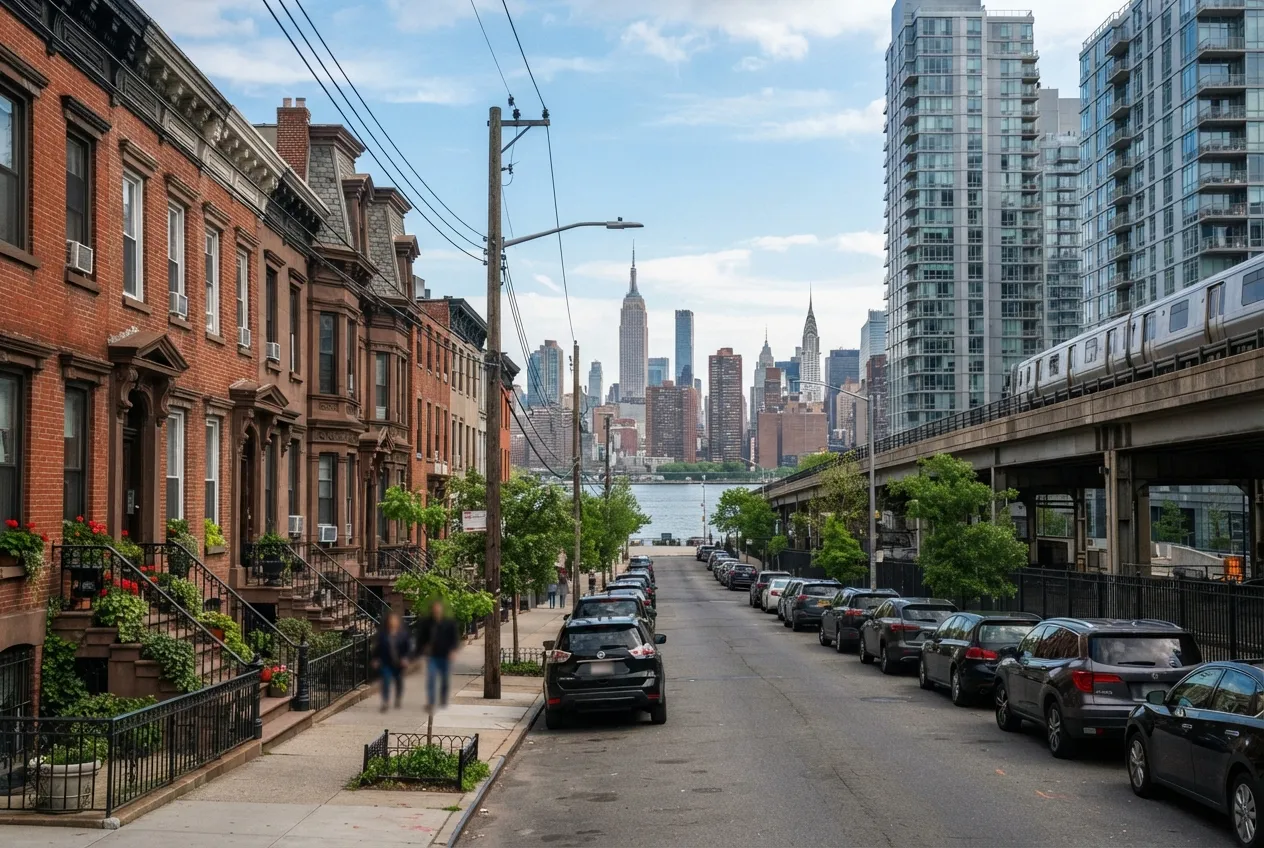
If your vents smell musty, stale, or smoky every time the heat or air conditioning turns on, the problem is usually inside the ductwork, not the room. MetroFlow helps Hunters Point homeowners in ZIP codes 11101 and 11109 find where an odor starts, remove the material causing it, and use sanitizing treatments only when the situation calls for them. Our office in Greenpoint, Brooklyn, is about a mile south of the neighborhood, so reaching your home is a short trip.
Where Duct Odors Come From in Hunters Point Homes
Hunters Point has many newer high-rise and mid-rise apartment buildings with ducted heating and cooling. It also has older rowhouses and converted spaces where ductwork was added over time. Each type traps odors in its own way. Tight, well-sealed apartments recirculate the same air for hours. Older rowhouses often have long duct runs with seams and low spots where dust and moisture collect.
These are the causes we find most often:
- Mildew around the cooling coil, drain pan, or nearby duct sections after a humid summer
- Dust and debris that settle during months when the system sits unused
- Pet hair and dander packed into return vents and filters
- Cooking grease and smoke pulled into returns near open kitchens
- Droppings, nesting material, or dead insects or rodents in the ductwork
- Fine dust left behind by a renovation or flooring job
Cleaning Comes First, Sanitizing Second
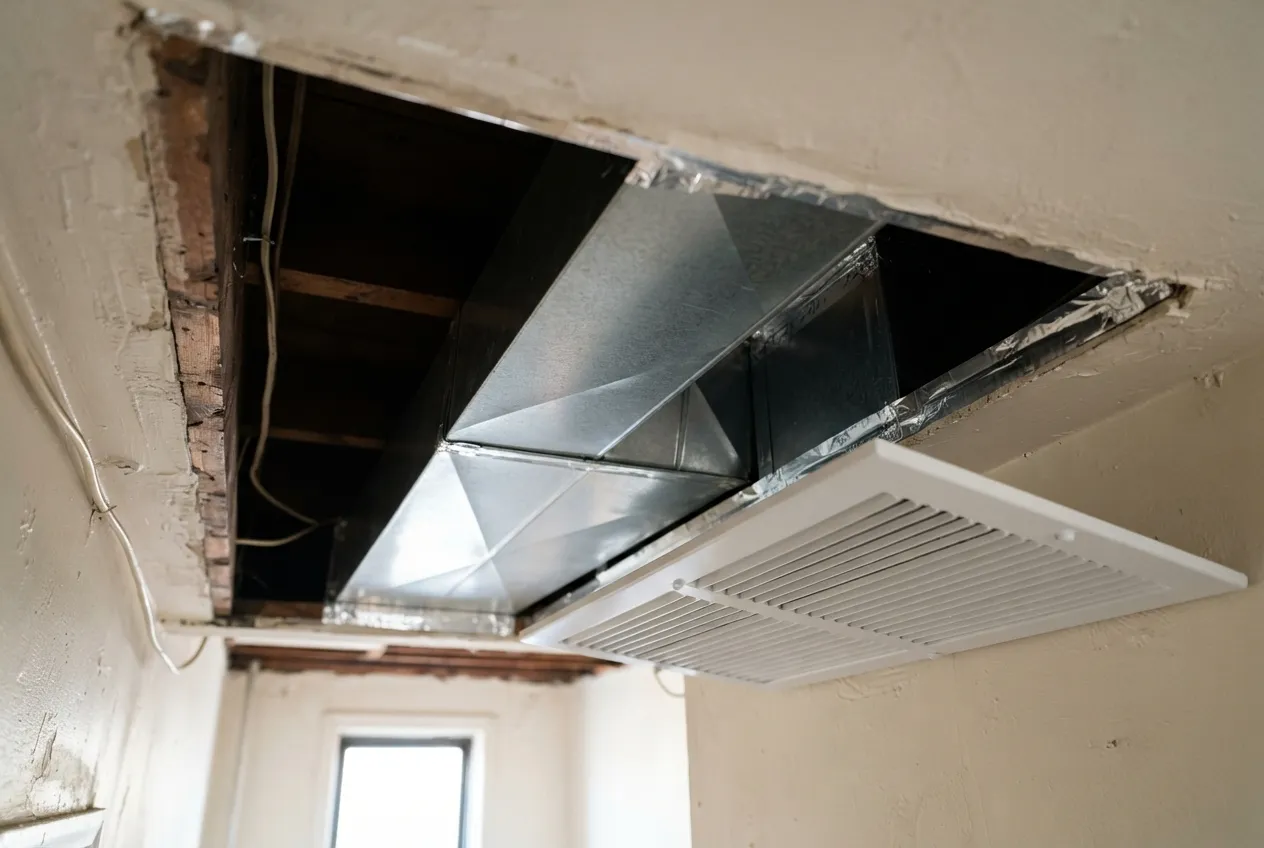
Spraying a deodorizer into dirty ducts covers a smell for a while, but the smell comes back. The U.S. EPA advises cleaning ducts when there is substantial visible mold growth, vermin, or excessive dust and debris. The EPA also says duct cleaning has not been shown to prevent health problems, and it urges homeowners to be careful with chemical treatments. We follow the same approach. Removing the source does most of the work, and a sanitizer is a targeted extra step, not a default add-on.
A typical visit includes:
- A camera inspection of supply and return lines to find the source of the odor
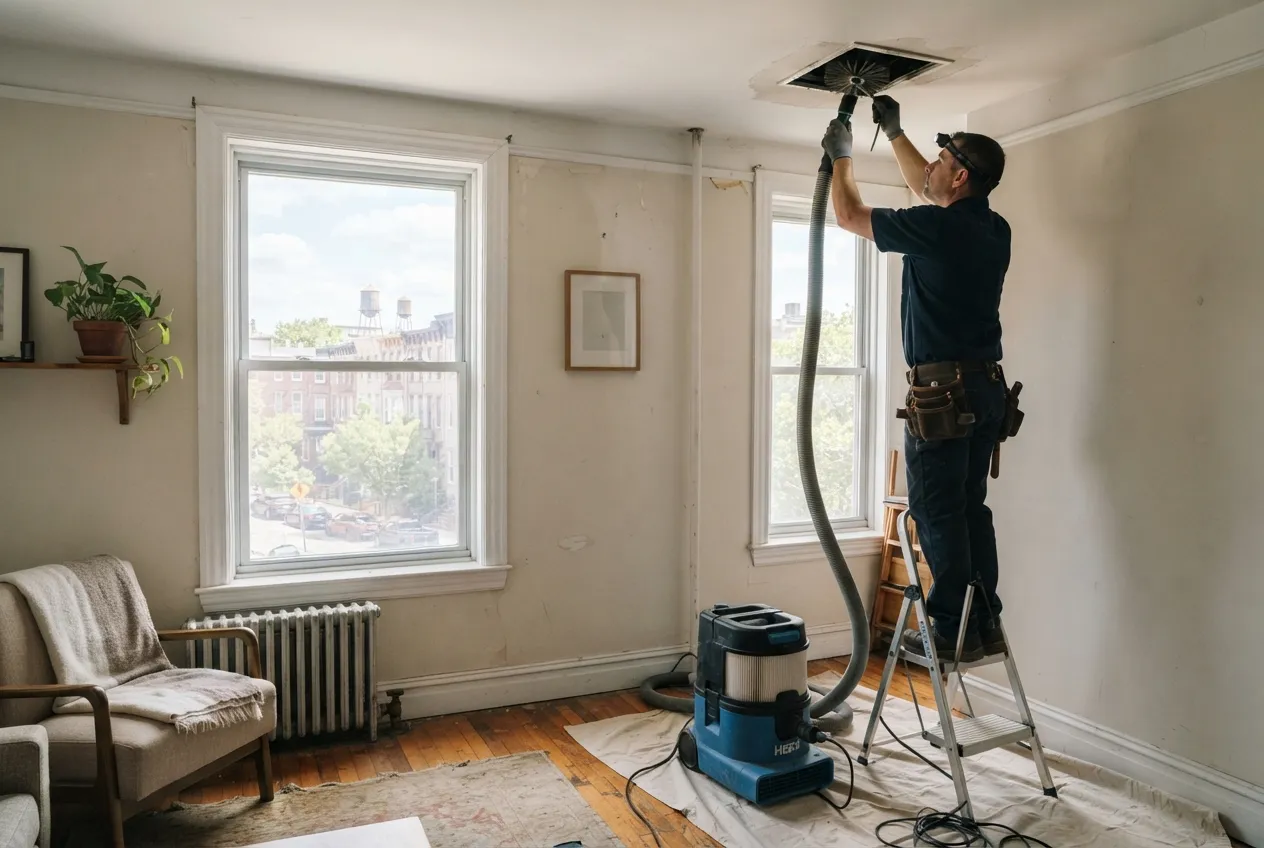
- Mechanical cleaning under negative pressure so loosened debris is captured, not blown into your rooms
- Cleaning of registers, grilles, and accessible blower components
- A check of the coil area and drain pan, where many musty smells start
- A sanitizer only if conditions call for it. We review the product with you before applying it
Working in Apartments and Rowhouses
In an apartment building, we coordinate around your building's rules, including elevator reservations, work hours, and any paperwork management requires. We protect floors and furniture along the work path and seal open vents while we work. In rowhouses, we pay close attention to basement and attic runs, where moisture and pests are more common.
Many people first notice a duct smell when the system switches modes. That often happens around the start of New York City's heat season, which runs from October 1 through May 31. If a smell shows up when the heat or cooling comes back on, that timing is a useful clue, and we'll factor it into the inspection.
Ready for cleaner ducts?
When the Smell Isn't Coming From the Ducts
Not every vent odor is a duct problem, and we won't sell you a cleaning you don't need. A burnt or lint-like smell can point to a clogged dryer vent. The U.S. Fire Administration identifies failure to clean as the leading factor contributing to home clothes dryer fires. A smoky or sooty smell in a rowhouse with a fireplace may be coming from the chimney. The NFPA 211 standard calls for chimneys, fireplaces, and vents to be inspected once a year. Sewer-like odors usually point to a dry drain trap or a plumbing issue rather than the HVAC system. If we find one of these, we'll explain what we saw and what to do next.
Serving Hunters Point and Nearby Neighborhoods
Along with Hunters Point, our certified technicians work throughout Long Island City, Sunnyside, and Greenpoint, and across the river in Murray Hill and Kips Bay. Because we're close by, we can return for a follow-up check if an odor needs a second look after cleaning.
More services in Hunters Point
- Air Duct Cleaning in Hunters Point
- Dryer Vent Cleaning in Hunters Point
- HVAC System Cleaning in Hunters Point
- Chimney Sweep in Hunters Point