
The short answer
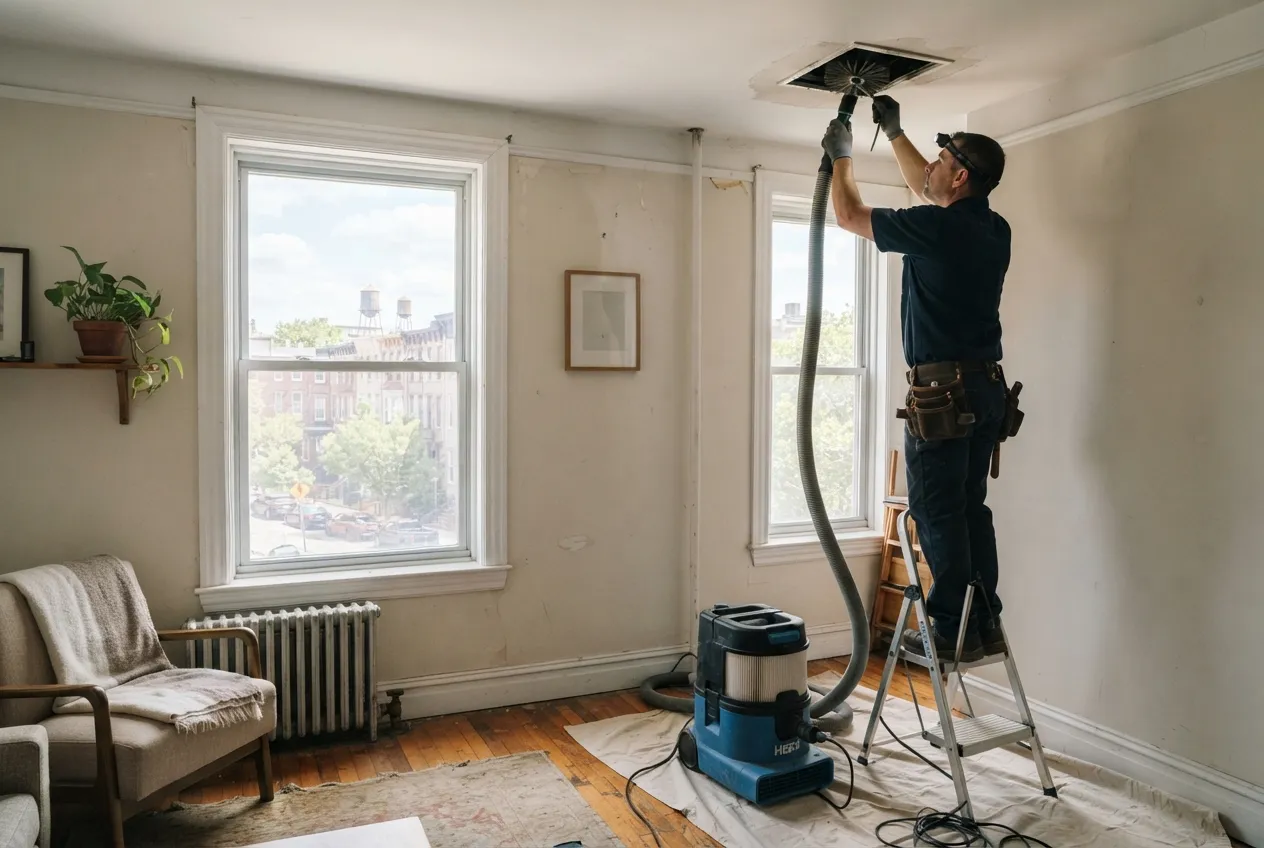
Lasting odor removal in Sunnyside ducts starts with finding and cleaning out the source, such as mold, rodent debris, grease or heavy dust. A sanitizing treatment can follow on cleaned surfaces when it makes sense, but a spray alone usually just covers the smell for a while.
If your Sunnyside home smells musty when the air conditioning kicks on, or a stale odor keeps coming back no matter how often you clean, the source is often inside the ductwork. MetroFlow's certified technicians track down what is causing the smell, physically clean it out, and use sanitizing treatments only when the situation calls for one. We work in apartments, co-ops, rowhouses and attached homes throughout the 11104 ZIP code. Sunnyside is a short trip from our office in Greenpoint, Brooklyn.
Where Duct Odors Come From in Sunnyside Homes
Sunnyside's housing is mostly pre-war apartment buildings, co-ops, attached rowhouses and two-family homes. Many of these buildings heat with radiators, so the ductwork in a typical unit serves central air, a ducted mini-split added during a renovation, bathroom and kitchen exhaust, or a dryer vent. Ducts that sit idle for months collect dust and trap humidity, and older buildings give pests more ways in. When the system starts up again, whatever has built up gets pushed into your rooms.
The type of smell usually points to the cause:
- Musty or damp: moisture and possible mold growth on duct surfaces, coils or a drain pan
- Sharp, sour or decaying: a rodent or other pest nesting or dying in a duct run
- Stale smoke, cooking grease or pet odor: smells absorbed into dust coating the duct walls
- Burning dust when heat first comes on in a forced-air system: dust settling on heating components over the off-season
- Hot or scorched lint: a clogged dryer vent, which needs attention right away
Cleaning First, Sanitizing Second
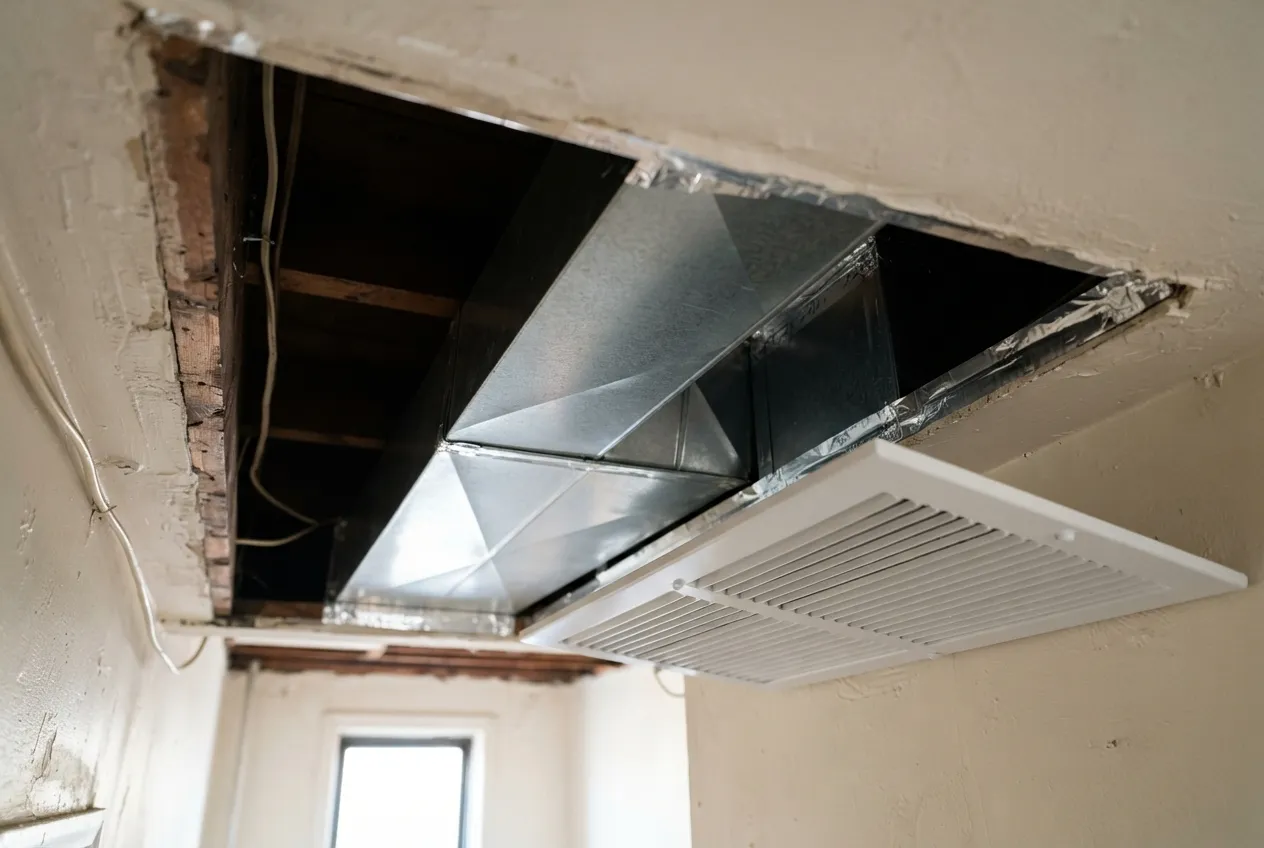
Deodorizing sprays and foggers alone rarely solve the problem. If the material causing the odor stays in the duct, the smell returns. That is why we clean before we treat. The U.S. EPA advises duct cleaning when there is substantial visible mold growth, signs of vermin, or excessive dust and debris. It also notes that duct cleaning has not been shown to prevent health problems, and it urges homeowners to be careful with chemical treatments. We follow the same approach.
If a sanitizer would help, for example after we remove mold or rodent debris, we apply it only to cleaned surfaces. Before we do, we explain which product we plan to use, why, and exactly where it will go. If you would rather skip chemical treatment, tell us. In many homes, thorough cleaning and fixing the moisture source handle the odor without any treatment.
What a Visit Looks Like
Every visit follows the same basic steps, so you know what to expect:
- Talk through when the smell appears, which rooms it affects and what changed recently
- Inspect accessible duct runs, registers, coils and drain pans, using a camera where we can
- Protect floors and furnishings, then seal off registers before cleaning
- Clean the ducts under negative pressure with agitation tools to pull debris out instead of spreading it
- Remove nests, droppings or contaminated insulation where we can reach them
- Discuss sanitizing, and apply it only if you agree
- Point out any leaks, condensation problems or pest entry points that could bring the odor back
Ready for cleaner ducts?
Apartments, Co-ops and Shared Ductwork
In multi-family buildings, some ductwork is shared. Bathroom and kitchen exhaust often connect to a common riser that runs through several units. We can clean the sections inside your apartment, but shared risers and rooftop fans usually fall under building management. If your building needs advance notice or approval for contractors, we are happy to coordinate with your super or managing agent.
Timing matters too. New York City's heat season runs from October 1 through May 31. Fall is when many residents with forced-air heat first notice a burning-dust or stale smell, and spring is when musty odors tend to show up in air conditioning ducts. Scheduling before either switchover gives you a fresh start.
Don't Ignore Dryer Vent Odors
A hot or scorched smell from the laundry area is a safety issue, not just a nuisance. According to the U.S. Fire Administration, failure to clean is the leading factor contributing to clothes dryer fires in homes. We clean dryer vents from the machine to the exterior outlet and check for crushed or overly long runs, which are common in tight apartment laundry spaces. Along with Sunnyside, we serve Long Island City, Hunters Point, Greenpoint, East Williamsburg and Williamsburg.
More services in Sunnyside
- Air Duct Cleaning in Sunnyside
- Dryer Vent Cleaning in Sunnyside
- HVAC System Cleaning in Sunnyside
- Chimney Sweep in Sunnyside