
The short answer
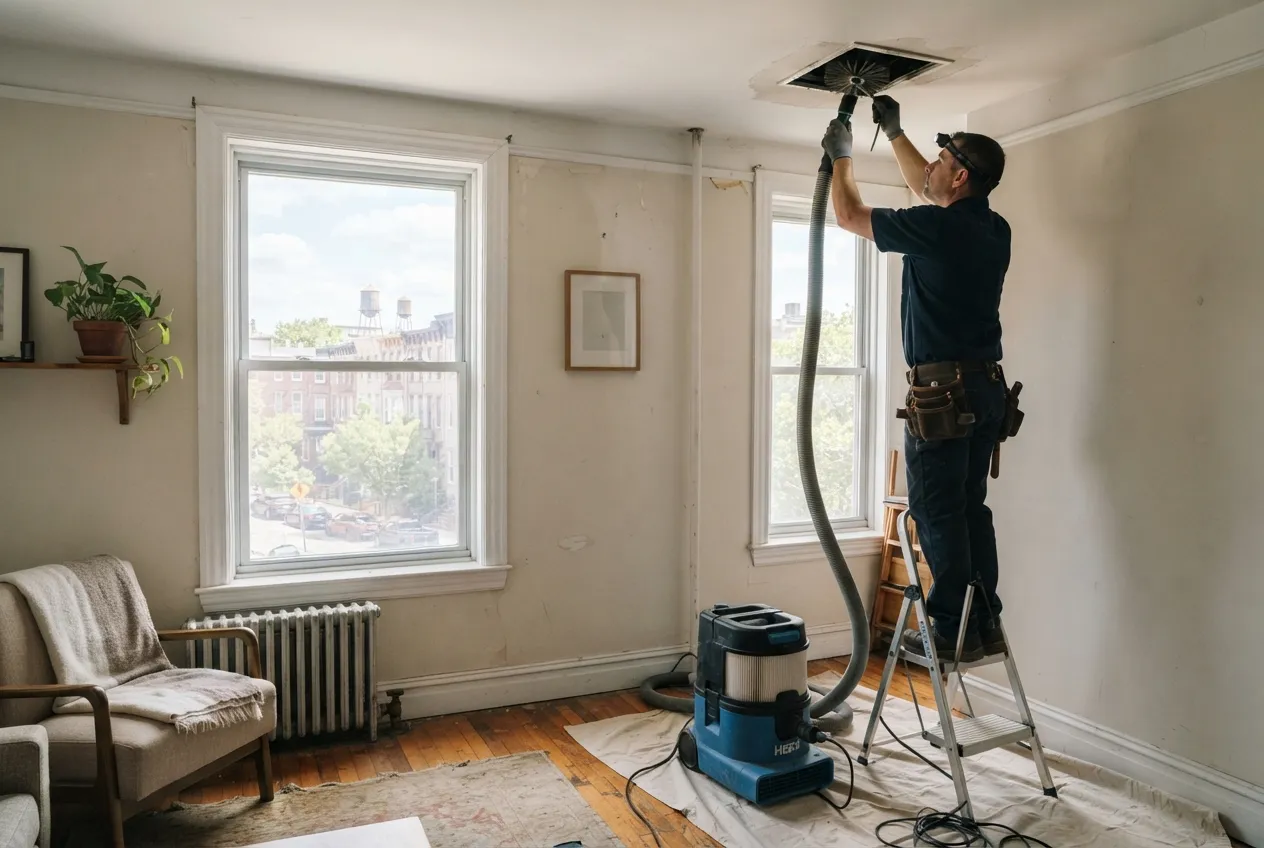
Most duct odors come from dust, moisture, debris, or pest activity inside the ductwork, so the fix starts with finding the source and cleaning it out. In East Williamsburg homes, MetroFlow's certified technicians inspect the system, clean the ducts, and use a sanitizer only when the conditions call for one.
A musty, sour, or stale smell that shows up every time the air handler kicks on usually means something is sitting inside the ductwork: dust that has absorbed moisture, debris from a renovation, or signs of pests. MetroFlow Air Duct Cleaning Services handles duct sanitizing and odor removal for homes across East Williamsburg in ZIP codes 11206 and 11211, about 2 miles southeast of our Greenpoint office. Our approach is simple. We find out where the odor is coming from, clean the ducts to remove it, and use a sanitizer only when the conditions call for one.
Where duct odors come from in East Williamsburg homes
Homes in East Williamsburg range from rowhouses and multi-family walk-ups to pre-war apartment buildings and converted industrial spaces. Many older buildings heat with radiators, so ductwork is often added later for central air, a heat pump, or ventilation. These retrofitted runs tend to pass through closets, dropped ceilings, and basements, where moisture and dust can collect without anyone noticing.
The cause of the smell matters, because each one calls for a different fix:
- Musty or earthy smells, often from condensation near the air handler or damp basement duct runs
- Dusty or burnt smells when the system first runs after sitting idle for months
- Sharp or sour smells that can point to rodent or insect activity inside the ducts
- Lingering smoke, cooking, or pet odors that have settled into dust on the duct walls
- Construction smells after a renovation sends drywall dust and debris into the returns
Cleaning comes first, sanitizing only when it makes sense
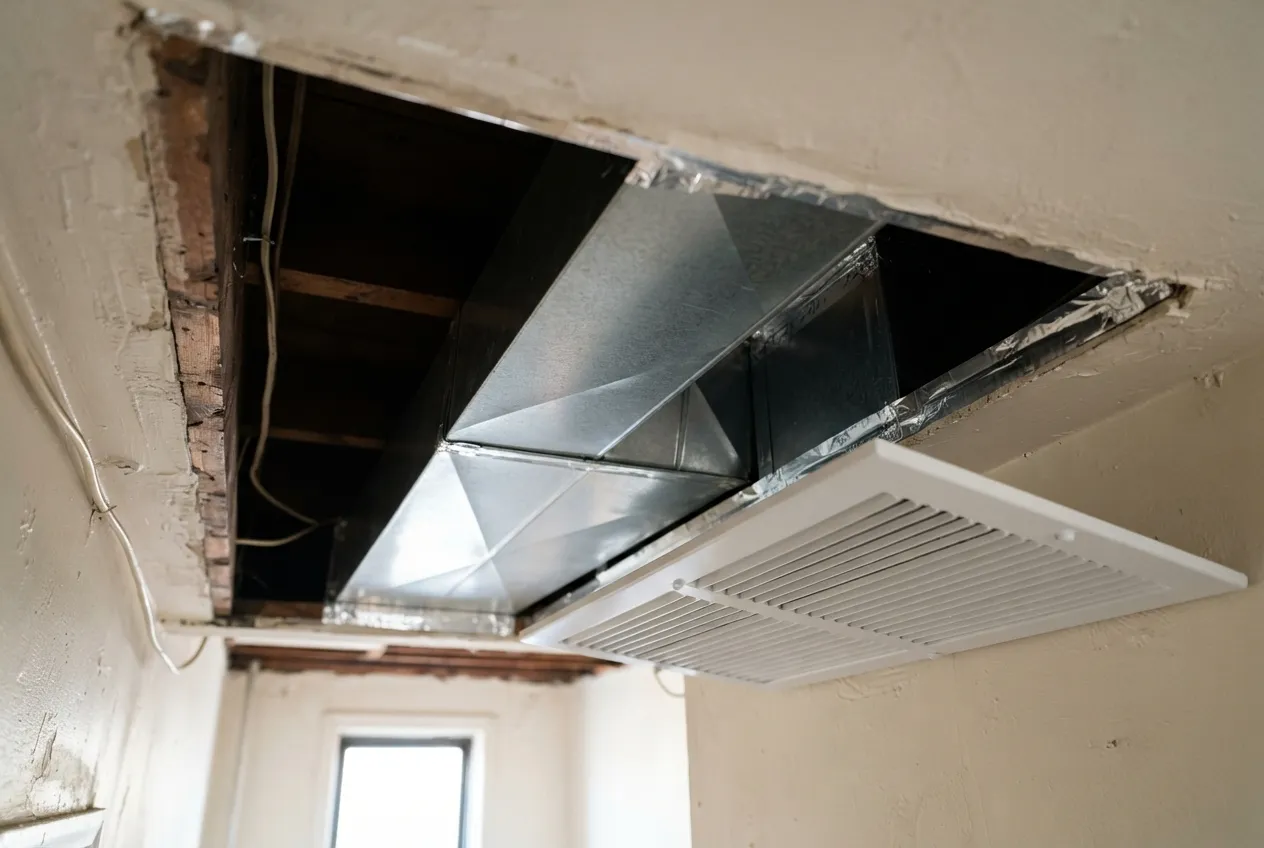
The U.S. EPA advises cleaning air ducts when there is substantial visible mold growth, vermin, or excessive dust and debris. It also points out that duct cleaning has not been shown to prevent health problems, and it urges homeowners to be careful with chemical treatments. We follow that guidance. Spraying a product into dirty ducts only covers up an odor. Removing the material that holds the odor is what actually gets rid of it.
If we find mold growth or signs of pests, we explain what we see before any sanitizer is used. We tell you which product we recommend and why, and we let you decide. If the smell is coming from somewhere outside the ductwork, such as a leak, a drain line, or a wall cavity, we tell you that too, so you are not paying to treat the wrong thing.
What a visit looks like
Our certified technicians work through the system in a set order, so nothing gets skipped:
- Walk through the home with you to learn when the smell happens and which rooms it affects
- Inspect registers, returns, accessible duct runs, and the area around the air handler
- Clean the ducts under negative pressure so loosened debris is pulled out instead of blown into your rooms
- Clean registers and grilles, and check the filter and drain pan area
- Apply a sanitizer only to the affected areas, and only if you approve it
- Review our findings with you, including any moisture or pest issues that need separate repair
Ready for cleaner ducts?
When the smell isn't coming from the ducts
Some odors that seem to come through vents actually start in other equipment. A hot or lint-heavy smell near the laundry area usually points to a clogged dryer vent. The U.S. Fire Administration identifies failure to clean as the leading factor contributing to home clothes dryer fires, so we check that vent when it is part of the picture.
Exhaust or combustion smells need attention right away. The NFPA 211 standard calls for chimneys, fireplaces, and vents to be inspected once a year. In New York City, when a building converts its boiler from oil to gas, the chimney has to be evaluated, and a new liner is often needed because gas exhaust produces acidic condensate that can corrode a masonry flue. If you have recently converted and notice odors, let us know.
Timing your service around the seasons
New York City's heat season runs from October 1 through May 31. Many East Williamsburg homeowners schedule odor work in early fall, before the furnace or heat pump starts running every day, or in spring, before air conditioning takes over. Either time works. We also serve nearby Williamsburg, Greenpoint, Sunnyside, Long Island City, and Hunters Point.
More services in East Williamsburg
- Air Duct Cleaning in East Williamsburg
- Dryer Vent Cleaning in East Williamsburg
- HVAC System Cleaning in East Williamsburg
- Chimney Sweep in East Williamsburg